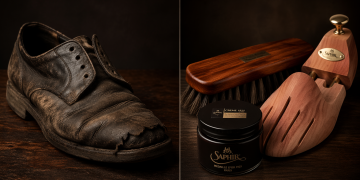



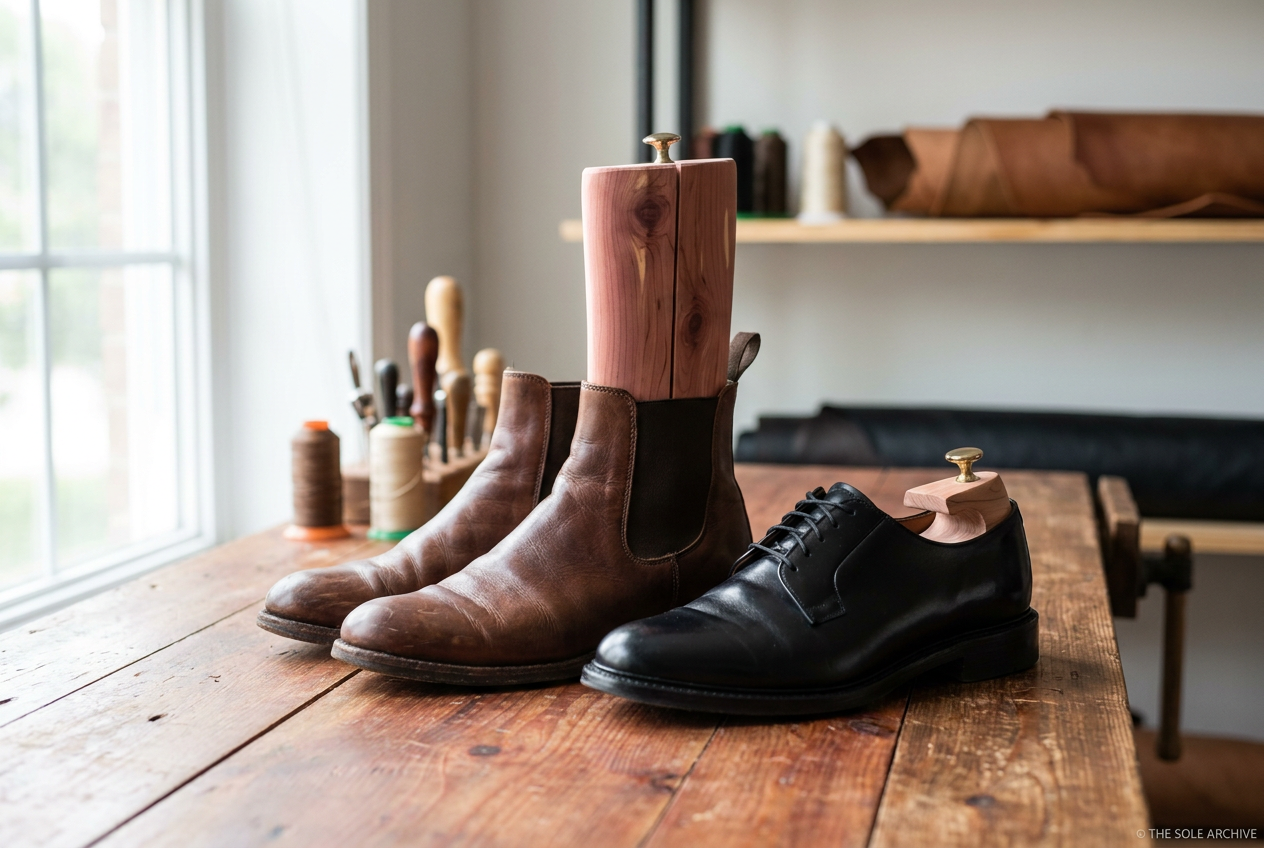
For every man who loves boots, sliding into a pair of perfectly broken-in, high-quality boots—be it classic Chelseas or rugged Dr. Martens—is an unparalleled pleasure. We spend hundreds, even thousands, on Goodyear Welted leather boots, expecting them to last a decade. However, the reality is that most boots don’t wear out on the streets; they slowly fade away in the closet due to a lack of proper boot care.
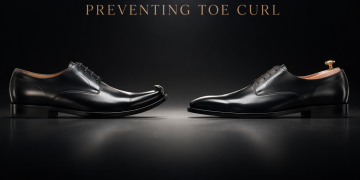
Have you noticed your boot toes curling upward or deep creases setting into the leather? Perhaps the shafts are collapsing like a deflated ball. This isn’t just an aesthetic issue; it’s structural decay.
Why this article? Because the debate over whether dedicated Boot Trees are necessary never ends in the footwear community. Some argue shoe trees are enough, while others insist on shaft support. Today, we’ll break down the maintenance logic, citing industry observations and practical experience to help you make the right choice for your collection.
What Are Shoe Trees vs. Boot Trees? A Basic Anatomy
Before diving in, let’s define the tools.
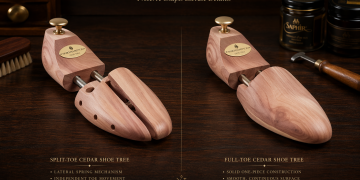
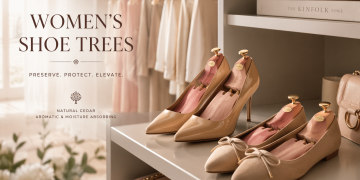
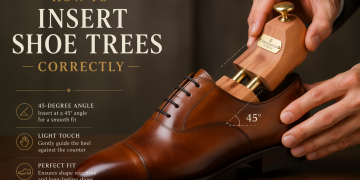
Shoe Trees typically consist of a toe piece, a spring mechanism, and a heel. Their job is to fill the foot cavity, applying longitudinal and lateral pressure as the leather dries to smooth creases and prevent shrinkage.
Boot Trees add a “shaft support” module. They fill the foot space and extend upward to support the ankle and calf sections of the boot.
Industry Consensus: Observations from Experienced Professionals
General industry testing suggests that for most 6-inch boots (like the classic Red Wing Iron Rangers), high-quality cedar shoe trees are often sufficient. However, it is widely observed that once your boots reach 8 inches or higher—such as cowboy boots or high-top work boots—dedicated boot trees become much more effective.
Experienced boot enthusiasts often recommend that rather than focusing solely on the “boot vs. shoe” label, you should ensure the shape fits the last. Observations in the repair trade show that cheap spring-loaded trees with ball-ends can apply uneven pressure, which may gradually compromise the heel structure of premium boots.
The Core Debate: The Actual Impact of Shaft Support
For fans of chelsea boot care and Dr. Martens, the shaft is the heart of the argument.
Chelsea boots feature elastic side panels. Without long-term support, gravity causes the ankle to collapse, forming irreversible wrinkles. This ruins the silhouette and causes the elastic to lose its tension prematurely.
For Dr. Martens, the tall shaft is a signature feature. Professionals have found that once the shaft collapses, leather stacks excessively at the ankle, significantly increasing the risk of cracks. Field observations indicate that using boot trees or shaft inserts helps maintain the upper’s integrity by keeping the leather upright.
The Science of Cedar: Why It’s the Gold Standard
When searching for best boot trees or cedar boot trees for men, “Cedar” is everywhere. This isn’t just marketing; it’s biochemistry.
Cedarwood, particularly Western Red Cedar, is rich in Thujaplicins, which have strong anti-fungal and anti-bacterial properties. Leather is organic and absorbs sweat, salts, and bacteria. If left to dry naturally, the leather becomes brittle and odorous. Cedar boot trees don’t just hold shape; they actively “wick” moisture from deep within the fibers and neutralize odors. Reddit
Customer Feedback: Lessons from Long-Term Users
To demonstrate the impact, we looked at long-term feedback from high-end boot enthusiasts. A typical comparison comes from two customers with similar wearing habits:
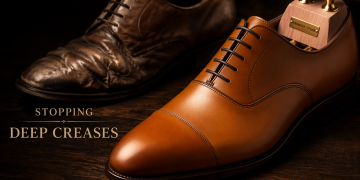
- Group 1 (No Support): Worn daily and left in the hallway without support. After two years, these boots showed significant “Toe Curl” and brittle leather filled with dark cracks. Even using a boot stretcher couldn’t fully restore the comfort.
- Group 2 (Proper Care): Cedar boot trees inserted immediately after each wear. The same model looked nearly new after two years, with shallow, flat creases.
Many customers noted that while they initially thought boot trees were a “gimmick,” seeing the cost of a ruined $400 pair made them realize that early care is the most cost-effective investment.
Comparison: Boot Trees vs. Shoe Trees vs. Alternatives
| Feature | Standard Cedar Shoe Tree | Professional Full Boot Tree | Plastic/Spring Tree |
|---|---|---|---|
| Shape Retention | Excellent (Foot) | Perfect (Foot + Shaft) | Fair (Risk of distortion) |
| Odor & Moisture | Excellent | Excellent | None (Traps moisture) |
| Applicability | Derbies, Short Boots | Tall Boots, Chelseas | Temporary Travel only |
| Practical Rating | ★★★★☆ | ★★★★★ | ★★☆☆☆ |
Shopping Recommendations
- Best Value: Cobbler’s Choice Cedar Boot Trees. The split-toe design fits various widths, and the solid cedar provides excellent wicking.
- Luxury Choice: Arterton Luxury Beechwood Trees. For John Lobb or Edward Green level boots, Arterton offers superior pressure distribution.
- Bulk Solution: Amazon 6-pack Cedar Trees. Great for large collections to lower the unit price.
When Boots Are Too Tight: boot stretcher and shoe expander
Sometimes, even with the right size, new boots feel tight. You need functional tools, not just maintenance ones.
- boot stretcher: A mechanical device to stretch specific areas (like the toe box).
- wooden shoe stretcher: Heavier than a tree, used to increase width capacity.
Tip: Use leather softening spray before using a *shoe expander* and apply pressure gradually.
FAQ: Frequently Asked Questions
Q: Do boot trees work better than shoe trees? A: Yes, for boots with higher shafts (over 6 inches). While shoe trees maintain the foot’s shape, boot trees provide critical support to the ankle and shaft area, preventing collapse.
Q: Can I use shoe trees in Chelsea boots? A: You can, but boot trees are preferred. Chelsea boots rely on elastic side panels; boot trees help maintain the tension and vertical structure of these panels better than standard shoe trees.
Q: Are cedar boot trees worth it? A: Absolutely. Cedar wood is naturally anti-bacterial and moisture-wicking. It actively pulls sweat and salt out of the leather, significantly extending the life of your boots compared to plastic versions.
Q: How long should I leave boot trees inside boots? A: Ideally, for at least 24 hours after each wear. This gives the cedar wood enough time to absorb moisture while the leather cools and settles into its shape.
Conclusion: Does Your Collection Deserve the Best?
If your closet mostly holds 6-inch work boots or Chelsea boots, investing in high-quality cedar boot trees will be your best maintenance move. It protects the shaft while offering natural purification.
As many bespoke shoemakers suggest, a good tree isn’t just delaying aging—it’s actively preserving the boot’s life. Don’t wait for cracks to appear; respect the craftsmanship of your footwear.