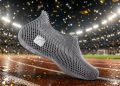



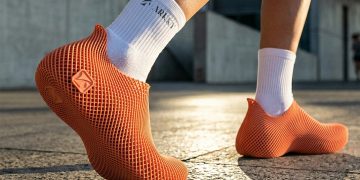
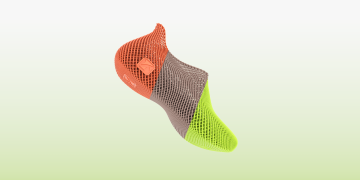
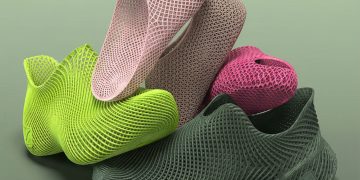
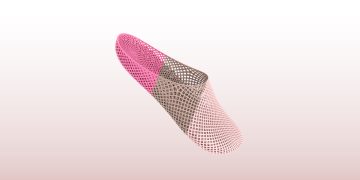
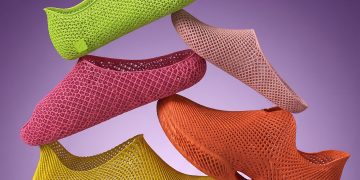
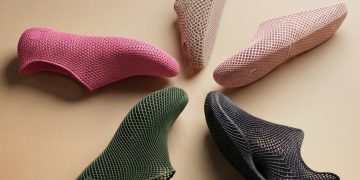
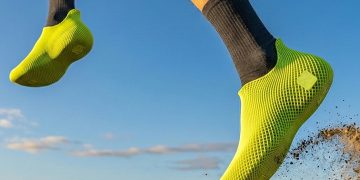
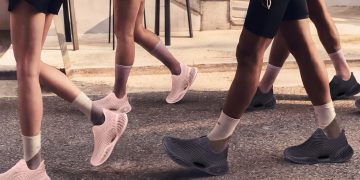

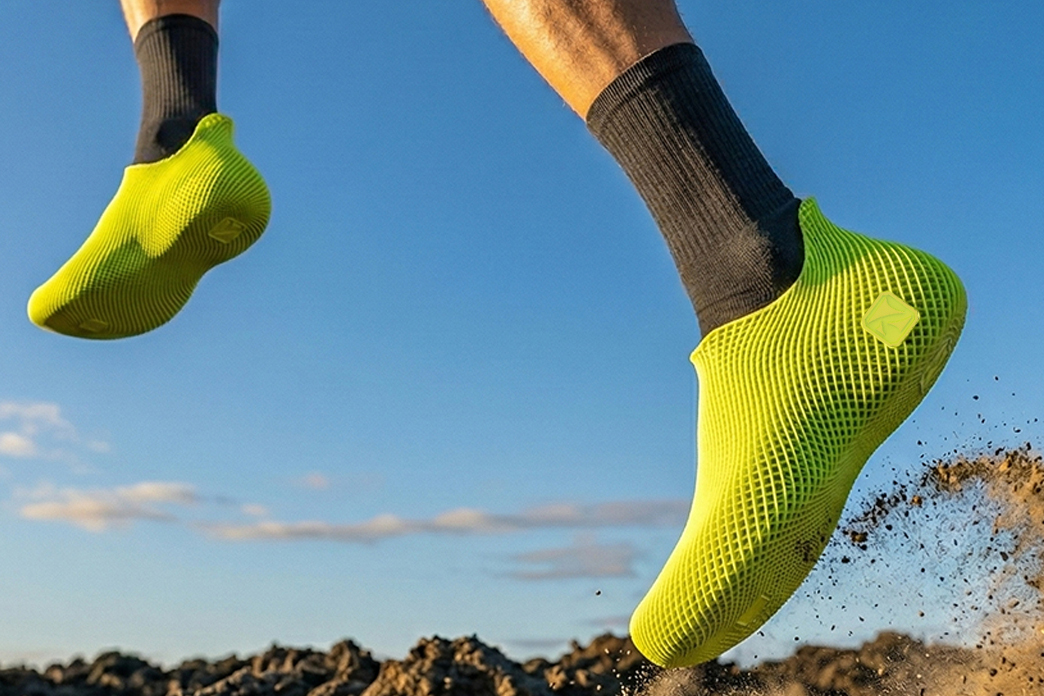
A digital wave reshapes footwear manufacturing at full speed. A transition phase is underway. Experimental prototypes evolve into scalable consumer goods. Prior articles covered early movers like Nike & Zellerfeld. This section shifts focus toward newer entrants entering the field.
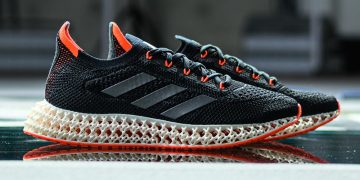
A forward signal stands out clearly. The 1.0 phase of 3D-printed shoes emerged through Adidas Carbon DLS systems. A new stage forms. The 2.0 cycle gains momentum from HALS plus a group of highly adaptive Asian innovators. Their arrival introduces real pressure on legacy footwear systems.
This piece breaks down that “hidden” technical layer. Brand activity across the past two years offers strong indicators. Future pathways for 3D-printed footwear become more predictable.
HALS Technology: The Ultimate Solution to Fully Solve “Speed” and “Scale”
Early-stage discussions around 3D-printed footwear often center on one constraint. Production speed limits scalability. Traditional DLS (Digital Light Synthesis) performs efficiently. A single pair still requires multiple hours. Material costs remain elevated.
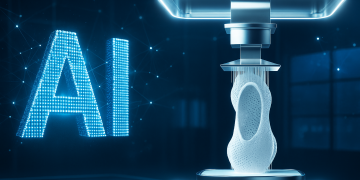
HALS (AI-Hindered Asynchronous Light Synthesis) introduces a new efficiency framework.
- Technical logic:HALS integrates AI-driven systems with a high-sensitivity oxygen inhibition layer. Real-time monitoring tracks fluid behavior plus thermal dynamics. Light exposure & curing speed shift dynamically.
- Speed advantage:Compared with first-generation DLS, AIHALS reduces production time by 5–10x. Current setups allow one printer to complete a full adult pair within one hour.
- Material innovation:HALS enables use of higher-viscosity resins with improved toughness. Early issues such as structural cracking plus elasticity loss get resolved.
ARKKY & ALIVEFORM act as key drivers behind this shift. Their progress shows that 3D-printed footwear can achieve true on-demand mass production similar to traditional injection molding.
The 10 Major Pioneer Brands of 2026 and Their Technological Moats
ARKKY — The Pioneer of HALS Technology
ARKKY positions itself beyond a standard footwear label. A technology-driven fashion lab better defines its identity.
- Technical features:Core system built on AI-HALS ultra-fast photopolymerization. This represents an AI-enhanced evolution of HALS.
- Differentiation:Design language carries a metallic, future-forward tone.
- Social media feedback:Reddit users respond positively. Many describe it as “the brand that brings 3D-printed footwear into daily life.” Waiting time drops from weeks to days compared with Zellerfeld.
STARAY — A Pioneer in Recovery Footwear Bridging China and Japan
STARAY operates from Hangzhou while expanding into Japan. The brand represents a high-level fusion of recovery function plus daily wear.
- Technical features:Uses SLS (Selective Laser Sintering) with a fully hollow lattice sole.
- Differentiation:Positioned as “Recovery Shoes.” Lattice structures distribute pressure dynamically. Foot fatigue gets reduced for athletes plus long-duration standing users.
- Market position:At CES 2026, its ultra-lightweight design (190g per shoe) attracts strong attention in Japan.
2AM (2AM3D) — Redefining “Durability” and “Sustainability”
2AM stands among the fastest-growing Chinese 3D-print brands. Its slogan reads “Luxury with Purpose.”
- Technical features:Combines proprietary “Dual-Spray” knitting with 3D-printed midsoles.
- Differentiation:Addresses the “hard to clean” issue. Products support full machine washing. Durability improves. Full recyclability becomes standard.
- User feedback:Threads & Instagram users report higher breathability. Break-in discomfort rarely occurs.
ALIVEFORM — The Ultimate Expression of Biomimetic Aesthetics
Designer Jack Irving drives ALIVEFORM forward. The brand serves as a showcase for HALS capability.
- Technical features:Complex organic geometries produced through HALS.
- Differentiation:Nature-based inspiration dominates. The “Monstera” series reflects intricate biological vein patterns.
- Uniqueness:Digital ownership enters the model. NFT integration plus virtual try-on connect directly with physical output.
Zyphor — The 2.0 Era of Lattice Cushioning
Zyphor focuses on advanced lattice performance systems. HALS v2.0 cushioning defines its benchmark position.
- Technical features:Adaptive airflow structures generate internal circulation during movement.
- Differentiation:Pressure mapping creates personalized density gradients for each user.
6. SCRY Lab — Still at the Pinnacle of Digital Aesthetics
SCRY remains influential despite not being new. “Digital Embryo” continues to guide the industry.
- Technical features:Fully digital workflow with focus on SLS processes.
- Latest moves:In 2026, its design base opens to third-party creators. A platform model similar to an “Android system” emerges.
7. HILOS — The Ethical Benchmark for Circular Manufacturing
HILOS leads circular manufacturing innovation from Portland.
- Technical features:Single-material SLS production removes adhesive pollution.
- Differentiation:Carbon reduction reaches 48%, verified by third-party certification.
8. 2AM (Sub-brand: 2AM Active) — A Marathon-Level 3D Challenge
This sub-line targets performance-oriented users.
- Technical features:HALS structures optimized for long-distance running.
- Social media buzz:TikTok runners report lower performance decay after 42 km compared with ETPU materials.
9. Zellerfeld (Platform Expansion) — Still the Core of the Ecosystem
Zellerfeld shifts from selling products toward defining production standards.
- Latest developments:By 2026, automated units expand across 12 cities. Local order plus local production becomes achievable.
10. PollyFab — The Catalyst for Cross-Industry Innovation
PollyFab operates as a high-performance additive platform. Collaboration with ALIVEFORM shapes 2026 aesthetics.
- Technical features:Focus on advanced photopolymer materials.
- Differentiation:Material stability improves under extreme temperatures. Heat softening gets avoided. Cold brittleness reduces.
HALS vs. DLS vs. SLS: A Full Comparison of Technical Strengths and Weaknesses
| Metric | HALS (e.g. ARKKY/ALIVEFORM) | DLS (e.g. Adidas) | SLS (e.g. STARAY/HILOS) |
| Print speed | Extremely fast (<1 hour per pair) | Moderate (several hours) | Slower (full-bed sintering) |
| Material properties | High-toughness liquid resin, rubber-like | Elastic, prone to hydrolyze over time | Durable, abrasion-resistant, powder texture |
| Breathability | Excellent (structurally tunable) | Good | Excellent (natural porosity) |
| Recyclability | 100% (liquid reuse) | Difficult | Very high (single-material TPU powder) |
Real Social Media Talk: The “Complaints” and “Masterpieces” on Reddit and TikTok
Brand messaging tells one side. User feedback reveals another layer. Social platforms contain extensive discussion. New inventions often face skepticism. Direct experience leads to more accurate evaluation.
1. “Does it really feel like walking on clouds, or is it just a gimmick tax?”
On Reddit’s r/Sneakers, discussion around STARAY stands out. A Japanese user comments: “Support feels stronger than OOFOS. The arch feels lifted by something almost alive.” Some users mention slight roughness when worn barefoot due to SLS texture.
2. “The embarrassment of not being able to wash it clean”
Lattice gaps trapping dirt becomes a frequent TikTok complaint. 2AM addresses this issue effectively. A viral video shows machine washing in action. Engagement reaches tens of thousands of likes. Real-world usability becomes a key advantage.
3. Grip issues: TPU’s inherent weakness
Most 3D-printed footwear relies on TPU materials. Reddit user @imfzhd notes reduced grip on smooth tile surfaces without tread design. Some brands respond by adding secondary rubber outsole patches in 2026 releases.
Industry Summary: Why Are Chinese and Japanese Brands Taking the Lead?
This competition reveals an unexpected pattern. Hangzhou-based players like STARAY plus newer digital brands such as 2AM begin surpassing Western incumbents in supply chain speed plus iteration cycles.
Three key drivers explain this shift:
- The early commercialization of HALS technology:Strong engineering expertise in liquid photopolymer scaling enables rapid deployment.
- Supply chain integration:STARAY integrates 3D scanning, AI-assisted design & production within one industrial zone. Cost compression becomes significant.
- Deep vertical focus on “functionality”:Western brands emphasize style & luxury. Asian brands focus on recovery, breathability & washability.
Conclusion
The year 2026 belongs to speed plus practicality in 3D-printed footwear. HALS removes efficiency bottlenecks. ARKKY, 2AM, STARAY confirm one principle. Technology must solve real user problems such as washability, recovery support plus value efficiency to reach mass adoption.
For first-time buyers, one guideline stands out: look beyond branding. Evaluate the underlying system (HALS orDLS). Confirm whether real-world usability meets expectations.
References and discussion links: