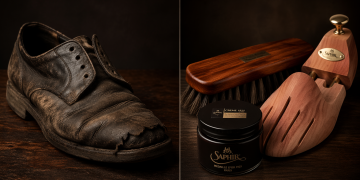
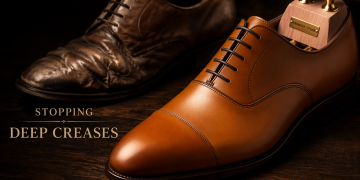










For many leather shoe enthusiasts, purchasing a high-quality pair of cedar shoe trees is the first step in protecting their investment. However, an unsettling paradox often arises: the very tool intended to maintain the shoe’s shape can, through improper use, damage the most fragile part of the shoe—the heel counter.
According to leather maintenance guides published by Footwear News, structural damage to the heel area is one of the most common causes of “unnatural retirement” for high-end men’s shoes. This article will explore shoe tree mechanics in depth, revealing how to insert shoe trees correctly through precise technique, ensuring your shoes remain as tight and upright as the day you bought them.
The Fragile Heel: Why It Fears Improper Pressure
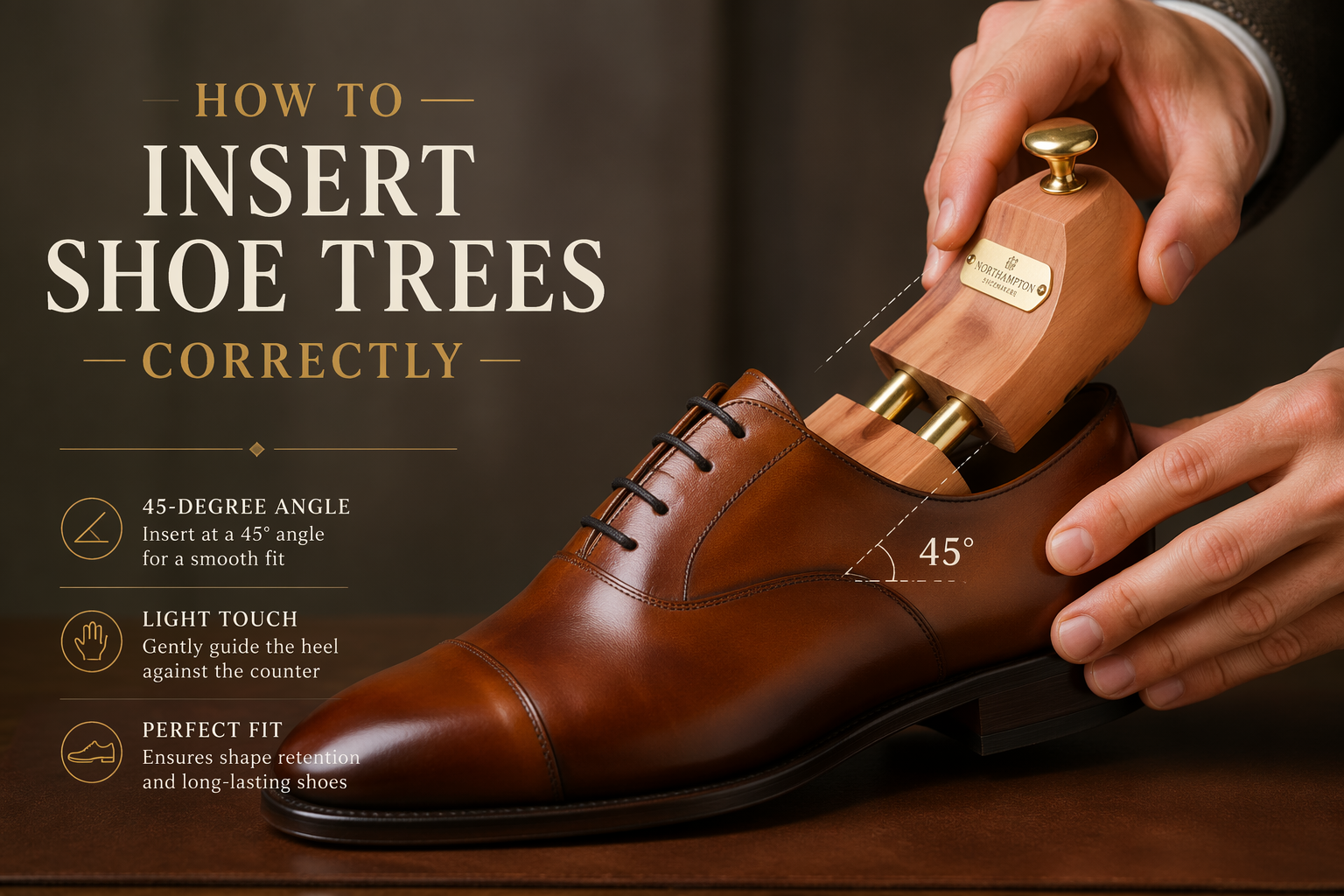
The heel of a leather shoe is not just a thin layer of leather. Hidden between the leather and the lining is a component called the “stiffener” or heel counter, made of thermoplastic, cardboard, or leather fibers. Its role is to cup the heel and provide support during walking.
A veteran cobbler with thirty years of experience in a top Italian workshop told the author: “Many people believe the tighter the shoe tree, the better. They shove them in like they’re loading a cannon. This concentrated burst of force can cause the heel counter to suffer physical fatigue displacement. Once the stiffener collapses or expands, the shoe loses its grip on the foot, and this damage is usually irreparable.”
This brings us to our core discussion: how to use shoe trees correctly.
The 45-Degree Angle Rule: Establishing the Right Entry
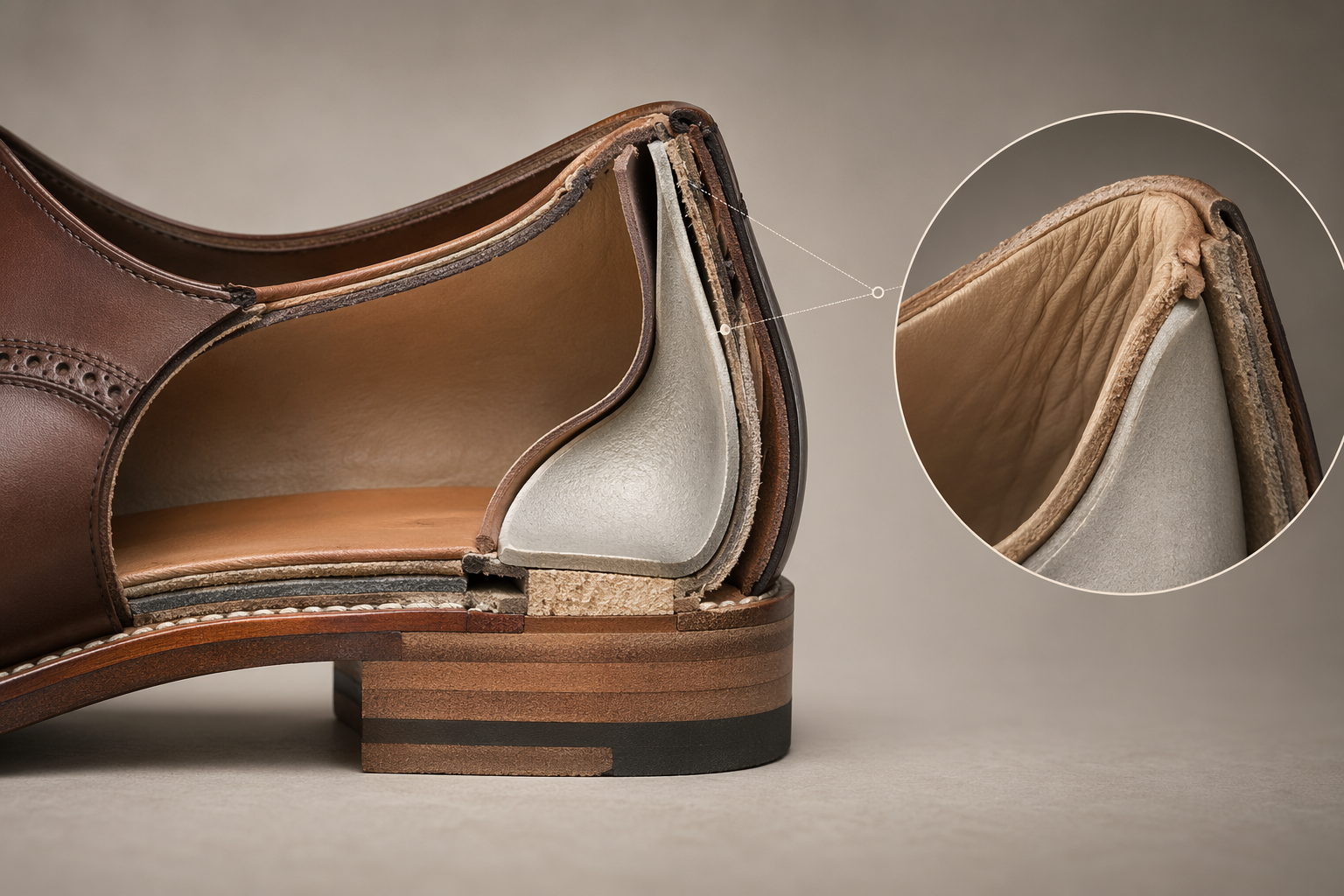
Most people have the habit of pushing the shoe tree in vertically, which is not only difficult but also risks scratching the lining leather with the sharp edges of the tree.
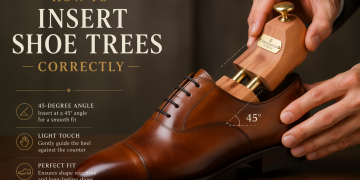
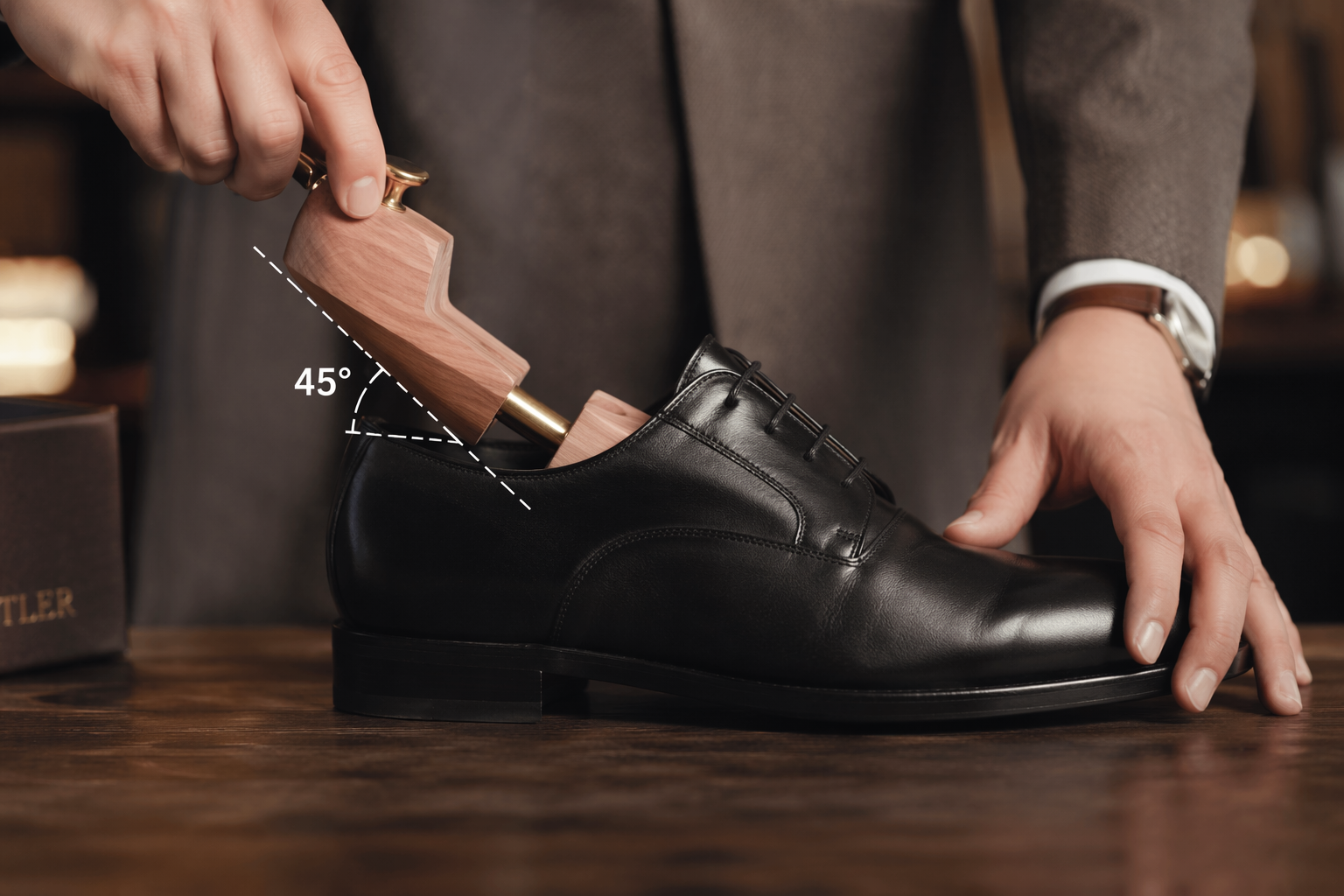
The correct technique to insert shoe trees should follow the “45-Degree Angle Rule.” First, insert the forefoot of the shoe tree at an angle of approximately 45 degrees, ensuring that both sides of the forefoot fit perfectly against the edges of the shoe cavity. At this point, the spring tubes or rods should be in a “ready-to-fire” compressed state.
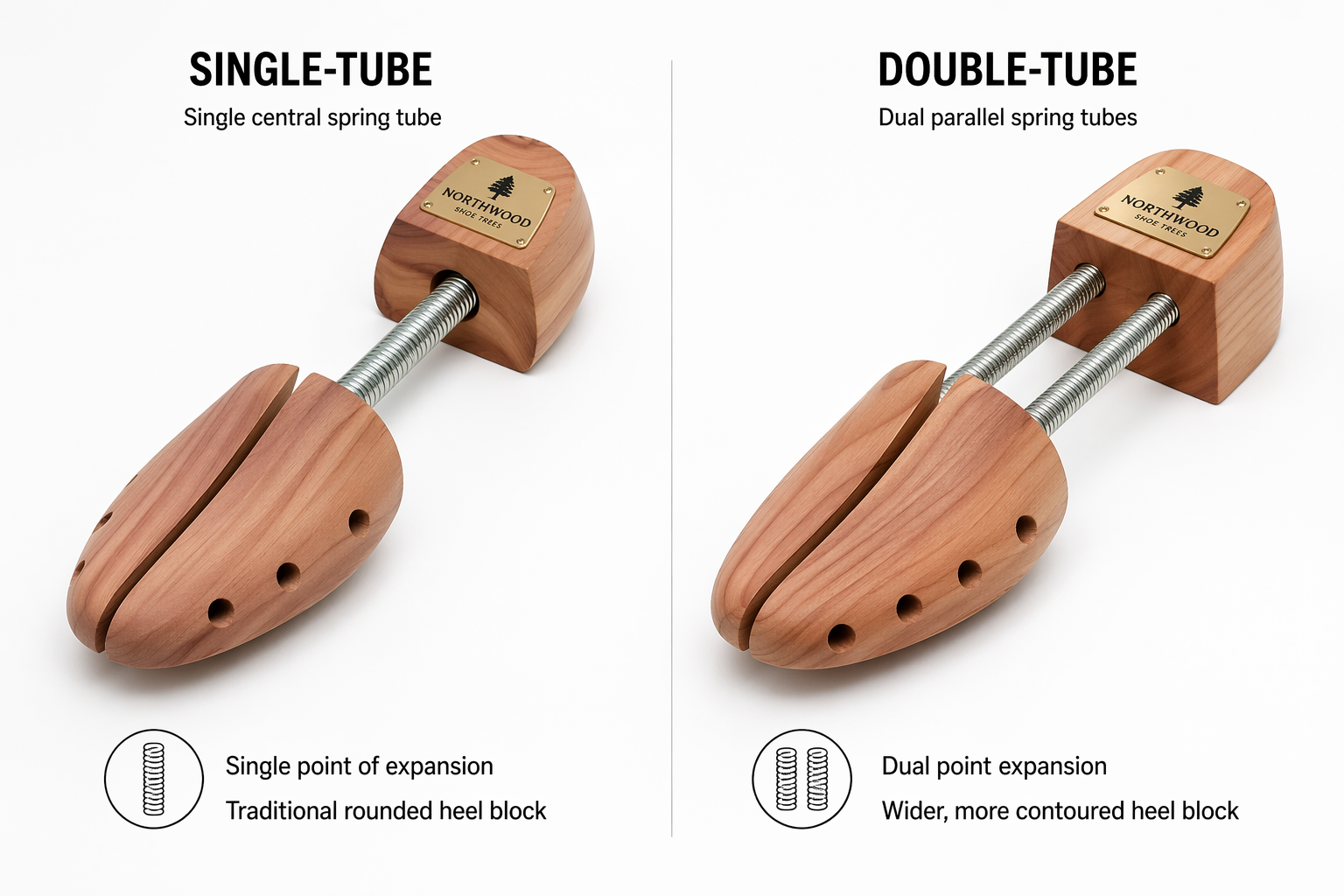
Mechanical Differences: Single-Tube vs. Double-Tube Logic
Understanding the differences in shoe tree mechanics is vital for protecting the heel.
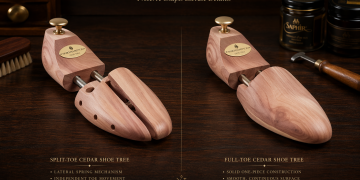
Single-tube shoe trees usually utilize a single central spring, concentrating the pressure point. Double-tube shoe trees distribute pressure through two parallel rods, making them not only more stable but also allowing the heel block to provide a more even, circular support.
A long-time customer of ours once mentioned: “I found that with single-tube trees, if you don’t align the center perfectly, they tend to lean to one side, causing an irregular bulge in the heel. After switching to double-tube trees, although it requires a bit more care during insertion, the shaping effect on the heel is noticeably gentler.”
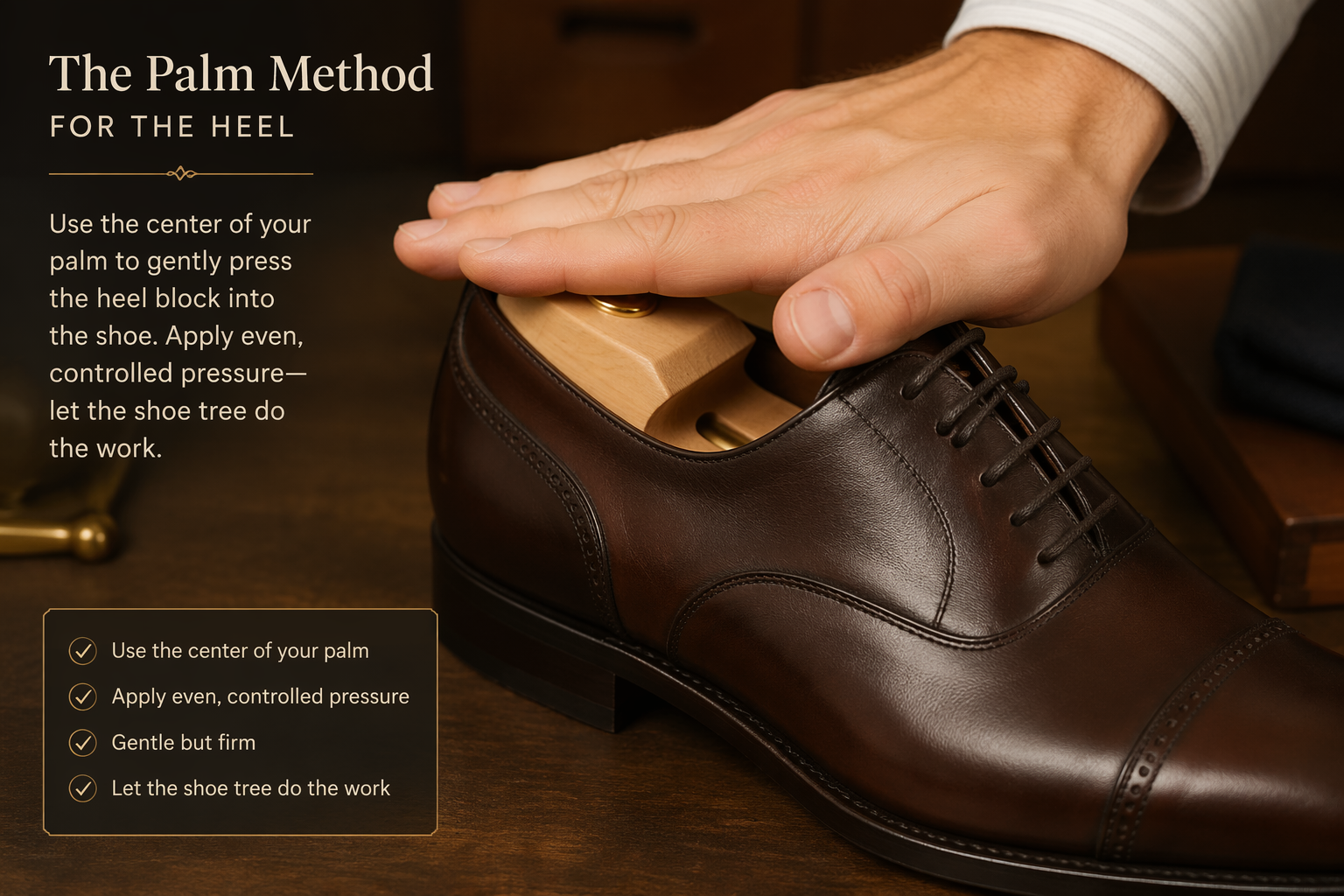
The Palm Method: Avoiding Finger “Brute Force”
This is a very practical shoe care tip. During the final step of insertion—when the heel block enters the shoe cavity—avoid pinching the top of the shoe tree with a few fingers and shoving it.
The correct technique is to use your palm to press against the back of the shoe tree. Utilizing the broad surface area of your palm, apply steady, uniform pressure downwards and forwards. As the heel block touches the back edge of the shoe’s sole, gently pull up the heel tab (if it’s a boot) or slightly move the heel edge aside to let the tree slide into place smoothly.
Fact-Based Shopping Recommendations: Choosing by Shoe Type
To prevent stretching the heel, selecting the right size and structure is the prerequisite:
| Shoe Type | Recommended Shoe Tree Type | Reason |
|---|---|---|
| Derbies / Oxfords | Double-tube Split-toe Cedar | Most stable structure, provides the most even heel protection |
| Loafers | Narrow-heel Single-tube | Loafer heels are extremely prone to stretching; choose a model with a smaller heel block |
| Chelsea Boots | Double-tube with Pull Ring | High boot shafts require pull rings to help positioning and prevent violent insertion |
Professional Advice: If your shoes are between sizes, always choose the smaller option. The role of a shoe tree is to “fill out wrinkles,” not to “stretch the leather.”
Key Operational FAQ
Q: Is it normal to hear the leather squeak when putting in a shoe tree? A: A slight rubbing sound is normal, but if the sound is sharp and you observe the heel leather bulging significantly outward, the shoe tree size is too large or the spring tension is too strong, requiring immediate adjustment.
Q: Should I insert the shoe tree while the laces are tied tight? A: Absolutely not. Before you insert shoe trees, you must loosen all laces. This not only facilitates insertion but also prevents the upper leather from suffering unnecessary extra tension.
Q: What if the heel block is too tight to push in? A: Check if the angle is correct. If it remains difficult, try fully compressing the spring before inserting at an angle, then releasing slowly. Never force a shoe tree into place by stepping on it.
Conclusion
Learning how to use shoe trees correctly is an essential journey from a “buyer” to an “expert.” The elegance of high-end leather shoes lies in the durability of their silhouette, and this durability often depends on the little bit of patience and delicacy you exercise when inserting shoe trees daily. Remember, the gentleness of force and the precision of the angle are the best homages to the leather.