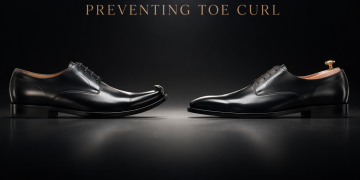
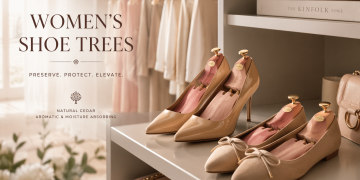
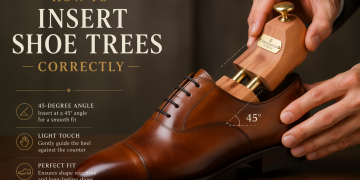








In the pursuit of making a pair of fine leather shoes last a lifetime, shoe trees are recognized as an essential partner. However, stepping into the high-end shoe care market reveals a fundamental divide in forefoot architecture: the Split-Toe versus the Full-Toe. Many enthusiasts make their choice based on the visual “heft” of the block, often overlooking the critical biomechanical differences in how these structures distribute pressure.
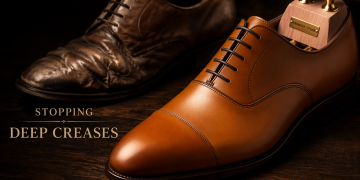
A shoe tree’s core mission is to mimic the internal volume of a human foot while providing a counter-force to leather as it relaxes and dries. Choosing the wrong shoe tree design can do more than fail to remove creases; it can actively distort the shape of expensive footwear. This article breaks down the mechanical logic of both designs to help you solve the dilemma of matching the right tree to the right shoe.
A veteran last-maker based in a prestigious European atelier (who requested anonymity due to brand exclusivity) once shared: “Most people assume a full-toe tree is ‘premium’ because it looks like a bespoke last. In the world of Ready-to-Wear (RTW), that assumption is risky. RTW shoes have internal volume variances. If a tree cannot adapt, it becomes the leather’s enemy rather than its protector.”
The Split-Toe Design: The Art of Lateral Adaptation
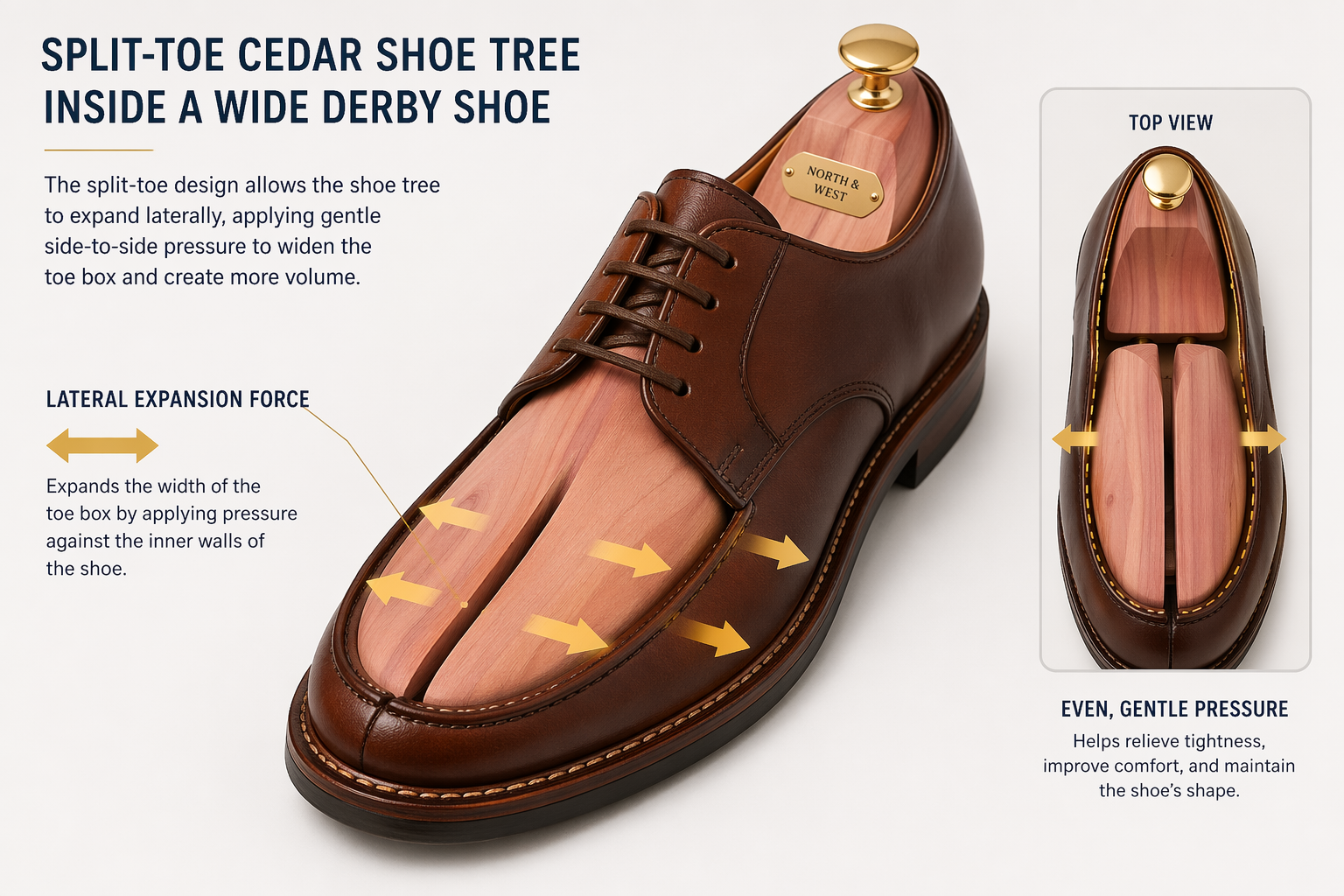
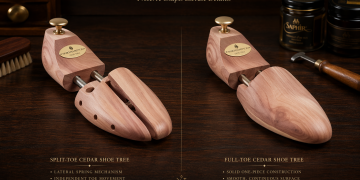
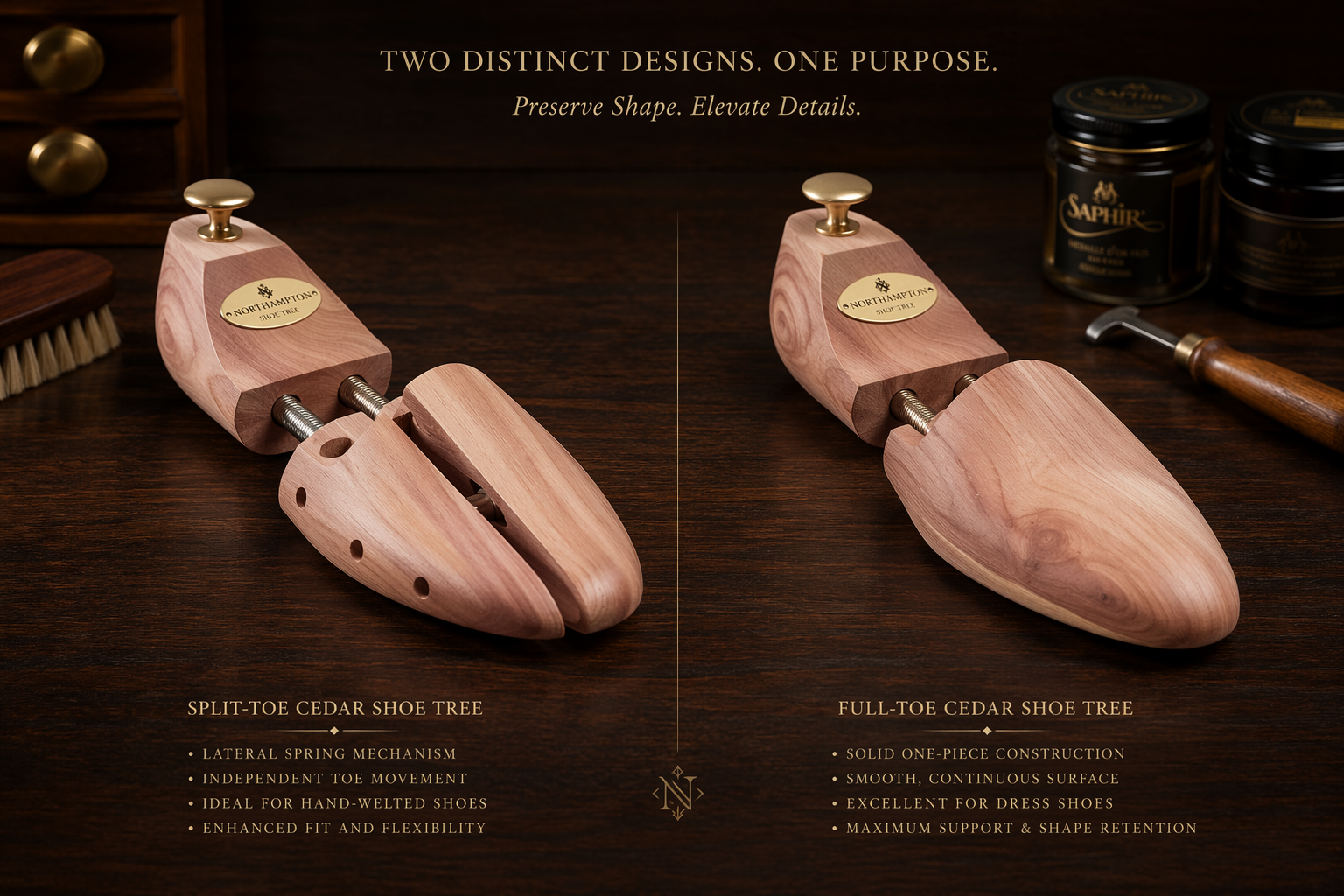
The defining feature of a split-toe shoe tree is the vertical slit in the forefoot, backed by a horizontal spring mechanism. The primary goal of this design is to provide “lateral expansion.”
According to a study on dynamic foot morphology in the Journal of Footwear Biomechanics, the human foot undergoes subtle physical changes in width due to blood flow and pressure during walking. The split-toe design excels because it adapts to the actual internal width of the shoe. When you push a split-toe tree into the toe box, the lateral spring expands. This is particularly beneficial for shoes with wider toe boxes, such as wide-fitting Derbies or rugged work boots.
An anonymous customer shared their feedback in an online community: “I tried using full-toe trees in my wide brogues, but the sides of the toe box always felt empty, and the creases remained. When I switched to a split-toe version, the slit expanded by about 3mm, perfectly smoothing out the side wrinkles. It taught me that ‘fit’ matters more than ‘fullness’.”
The Full-Toe Design: Structural Integrity and Volume Filling
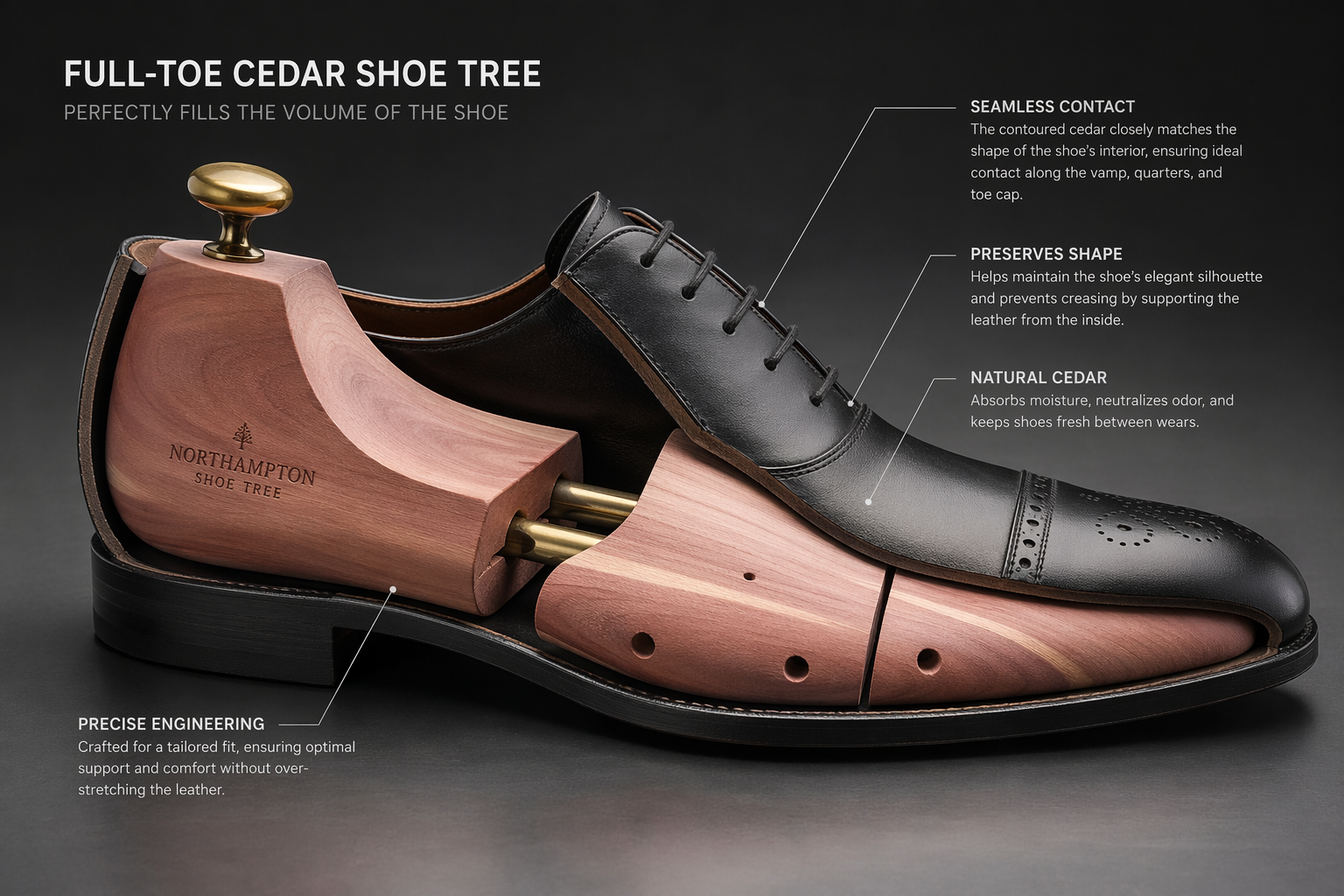
In contrast, full toe shoe trees feature a solid, unyielding forefoot block. It does not offer lateral adjustability but provides unparalleled stability in terms of longitudinal support and overall volume displacement.
The full-toe tree mimics an idealized, perfect foot shape. It is most suitable for shoes with precise, sleek toe designs, such as Oxfords or Chelsea boots. Because these styles often use thinner, tighter leathers, the solid structure provides comprehensive support from the vamp to the toe cap.
The key here is the “volume ratio.” In shoemaking, the volume of the last determines the fit. If your footwear follows a standard last (D or E width), full toe shoe trees ensure there is no gap between the wood and the leather, preventing the vamp from collapsing over time.
Pressure Distribution: A Comparative Analysis
To visualize the difference, let’s break down the forces within the shoe:
- Longitudinal Pressure: Provided by the center spring in both designs to keep the shoe’s length taut.
- Lateral Pressure: Provided by the side spring in split-toe models to stretch the wings of the toe box; full-toe models rely entirely on the wood’s fixed width.
- Vertical Pressure (Vamp): Full-toe models offer more uniform support for the top of the shoe due to the larger contact surface.
| Dimension | Split-Toe Design | Full-Toe Design |
|---|---|---|
| Focus Area | Lateral expansion; edge creases | Total volume; vamp profile |
| Adaptability | Very high; fits various widths | Lower; depends on exact sizing |
| Best For | Wide lasts, Derbies, Boots | Oxfords, Loafers, Slim Dress Shoes |
| User Consensus | “Fills the empty sides perfectly” | “Provides last-like stability” |
Decision Guide: Matching Design to Shoetype
At 70max, we emphasize “targeted support.” Based on industry expertise, here is your decision path:
- Check the Toe Box Width: If your shoes have a rounded, voluminous toe box, go with the Split-Toe. It ensures the leather stays taut horizontally as it shrinks.
- Consider Leather Thickness: For soft suede or ultra-thin calfskin, a Full-Toe tree is often better. The localized pressure from a split-toe spring can sometimes leave faint marks or bulges on thinner skins.
- Sizing Margin: If you bought shoes that are a half-size too large, a full-toe tree can act as a better “volume filler” to maintain the overall structure.
Frequently Asked Questions (FAQ)
Q: Can the slit in a split-toe tree damage the leather? A: No. The spring tension is precisely calibrated to expand the leather gently. It is designed to provide tension, not to force the leather beyond its natural limit.
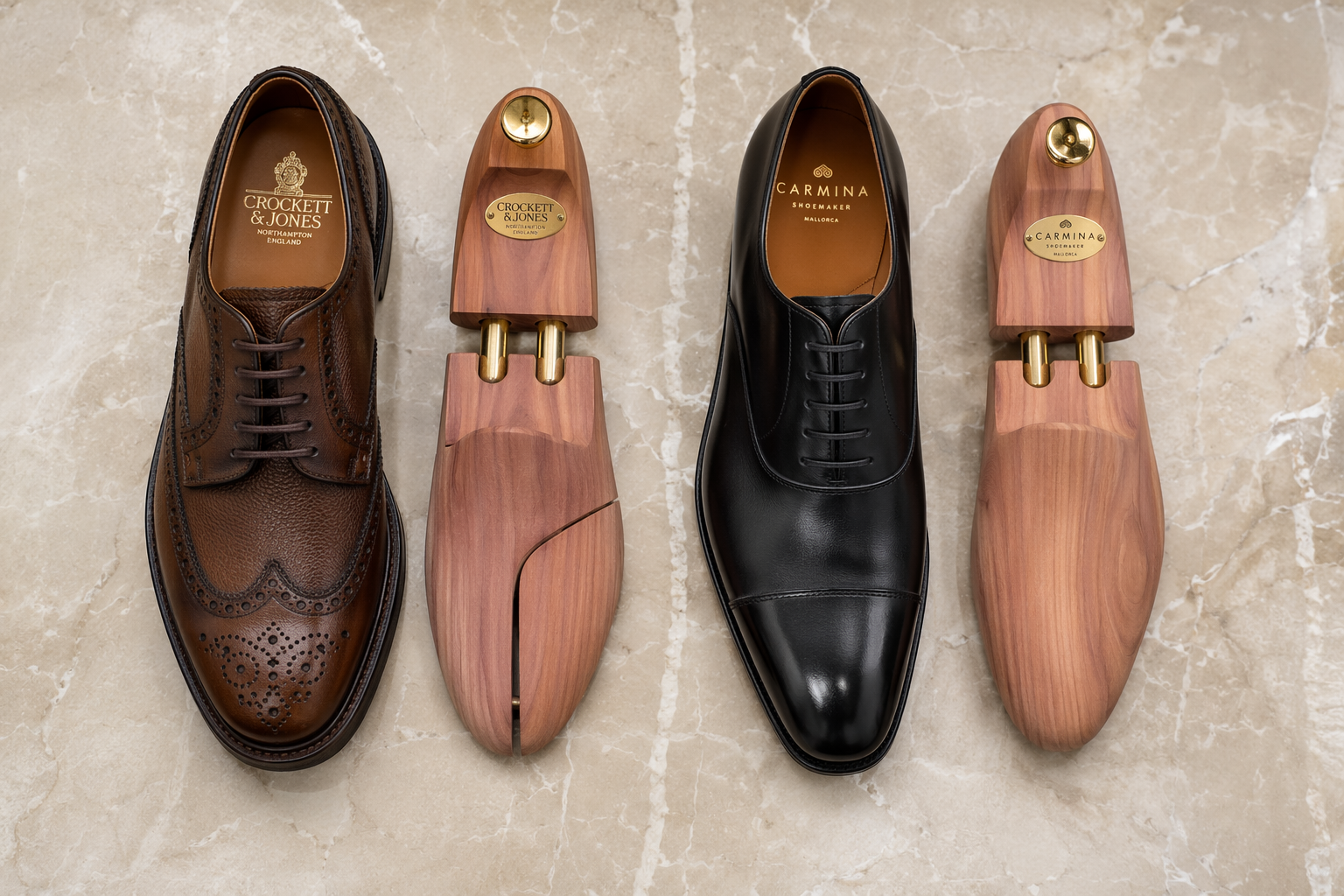
Q: Why do some luxury brands only sell full-toe trees? A: Most luxury houses have specific last standards. Their full-toe trees are shaped exactly to their proprietary lasts, removing the need for lateral adjustment.
Q: If I can only buy one pair for multiple shoes, which is better? A: The split-toe design usually offers better versatility across different RTW widths due to its adaptive nature.
Conclusion
Choosing a shoe tree design is not a competition of which is “better,” but a game of precision matching. The split-toe wins on flexibility; the full-toe wins on architectural rigor. As our anonymous last-maker concluded: “The value of a shoe tree isn’t how expensive it looks on a shelf, but how it makes the leather feel like it’s back on the day it was born.”