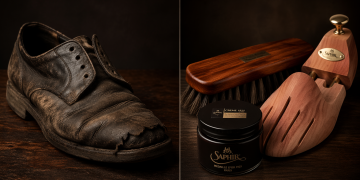
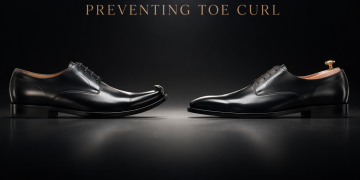

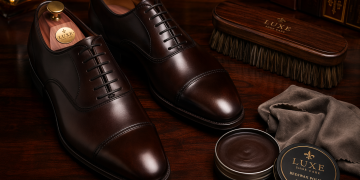


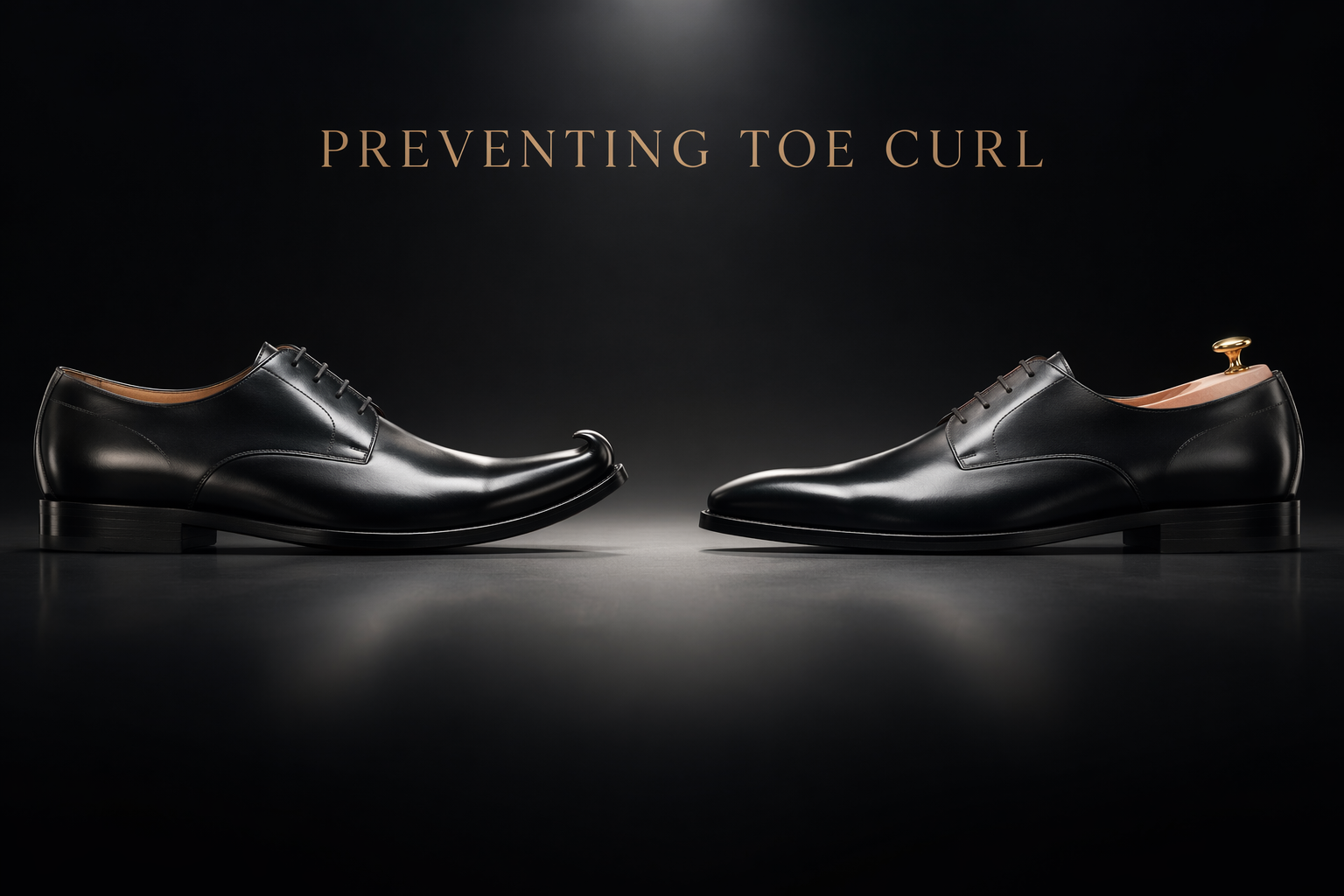
In the micro-aesthetics of gentlemanly attire, few things undermine elegance more than a pair of leather shoes with an excessively upward-curling toe. This phenomenon, known in the industry as “Toe Curl,” is not just a visual flaw; it is a red flag signaling structural aging and a lack of maintenance. For a pair of expensive Goodyear Welted shoes, maintaining a smooth, ground-hugging silhouette from heel to toe is an invisible benchmark of its owner’s taste and professionalism.
According to leather science research reports from the University of Northampton, physical deformation of leather has a significant “cumulative effect.” Without intervention, this curl becomes permanent, eventually leading to uneven sole pressure and deep surface cracks that are difficult to heal. This article will explore the scientific roots of this issue and reveal how to effectively prevent shoe toe curl using professional shoe trees for dress shoes.
Why Do Shoes “Look Up”? Analyzing the Causes of Toe Curl
To solve a problem, one must first understand its nature. Toe curl is not accidental; it is the result of the physical properties of leather combined with the mechanics of the walking gait.
1. Physical Stress of the Walking Cycle
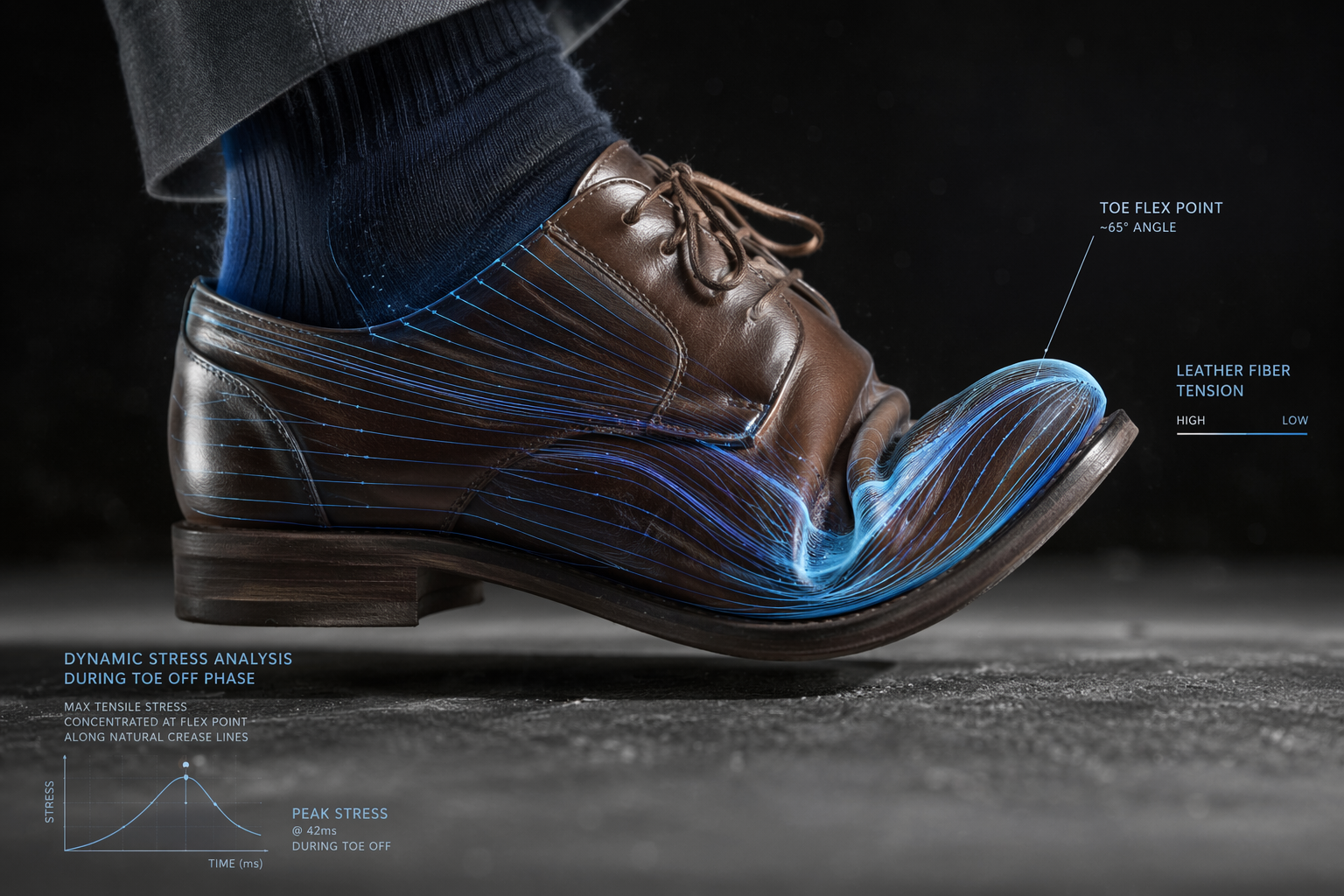
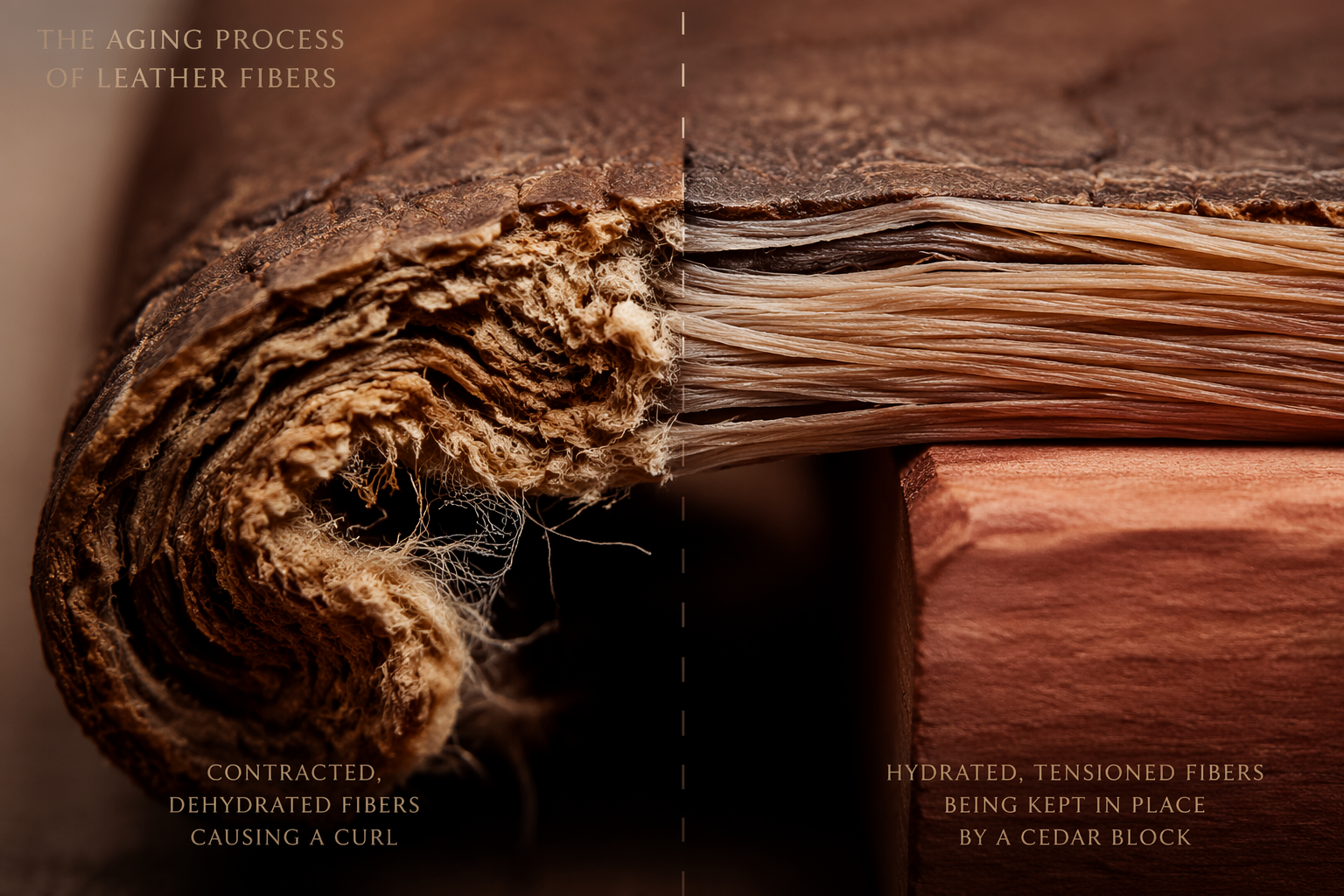
During daily walking, the forefoot of the leather shoe undergoes intense bending with every step. Leather fibers contract on the upper surface while stretching on the sole. Over thousands of repetitions, the leather begins to develop “physical fatigue.”
2. The “Setting” Effect of Moisture
Leather is composed of collagen fiber bundles. When moisture (perspiration) from the feet penetrates the fibers, the leather becomes soft and plastic. However, when you take off the shoes and the leather dries naturally without an external force to pull it back to a horizontal state, it tends to stay in the bent position. As an anonymous London bespoke cobbler stated: “Leather is like a piece of wet paper; if you bend it while wet and don’t press it flat while drying, it will never go back.”
3. The Aftermath of Lacking Frontal Support
Many inferior shoe trees on the market only feature a simple rear spring, concentrating pressure at the heel with almost no downward force on the toe box area where it is needed most. This allows the toe to curl upward under the dual effects of gravity and drying-induced contraction.
Scientific Intervention: How Full-Toe Shoe Trees Correct the Silhouette
To maintain shoe shape, we need more than just a filler; we need a dynamic physical correction system. This is the raison d’être of “Full-Toe Cedar Shoe Trees.”
Leverage and Downward Pressure
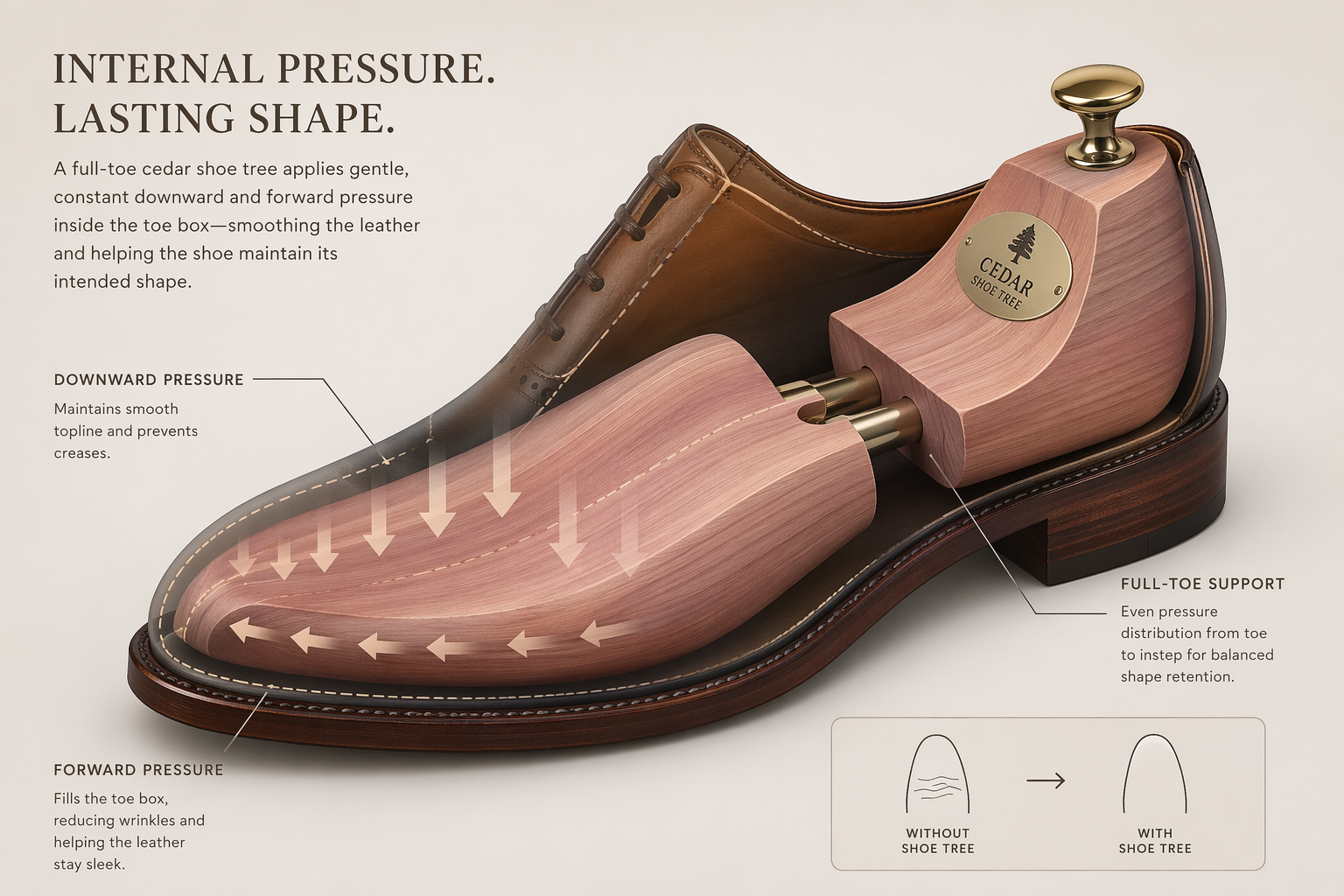
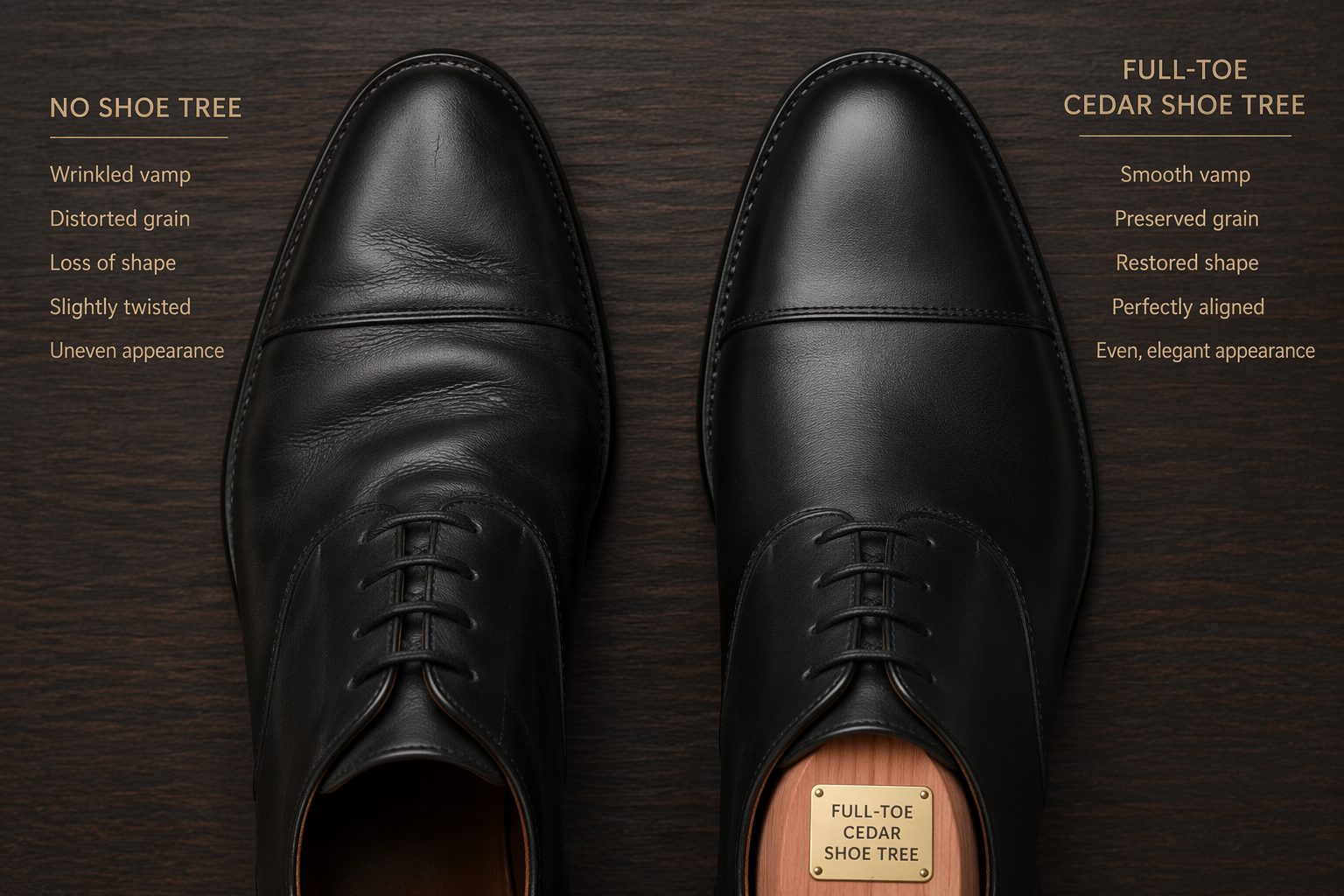
A well-designed shoe tree for dress shoes generates a bidirectional force through its internal spring system upon insertion. This force extends longitudinally to eliminate wrinkles, but more importantly, it utilizes the principle of leverage through the wide forefoot block to apply a constant, downward pressure inside the toe box. This force effectively counteracts the natural tendency of the leather to curl upward, pressing the toe back down to the level of the sole.
Fill Rate and Silhouette Restoration
The key to a full-toe design lies in its “high fill rate” within the toe box. This means it makes full contact with the interior leather, distributing horizontal and longitudinal tension evenly to prevent shoe toe curl. An anonymous menswear blogger shared: “I had an old pair of Edward Greens with a curl of about 15 degrees. After three months of consistent use with full-toe cedar shoe trees, the curl was restored to nearly factory condition, under 5 degrees. The magic of physical correction is something no expensive conditioning cream can replace.”
Shopping Logic for Preventing Toe Curl
Not all shoe trees are up to the task. Below is a comparative analysis based on structural mechanics:
| Feature | Full-Toe Split Cedar Shoe Tree | Traditional Single-Tube/Narrow Tree | Plastic Travel Tree |
|---|---|---|---|
| Downward Pressure on Toe | ★★★★★ (Strongest) | ★★☆☆☆ (Weak) | ★☆☆☆☆ (Nearly zero) |
| Lateral Expansion | ★★★★★ (Adjustable) | ★★★☆☆ (Fixed) | ★☆☆☆☆ (Very poor) |
| Silhouette Restoration | Excellent; corrects existing curl | Average; only prevents worsening | Zero; only for display |
| Target Audience | Luxury dress shoes, Goodyear welted | Ordinary business shoes | Travel use only |
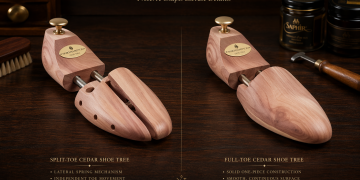
Shopping Recommendation: For gentlemen pursuing the ultimate silhouette, a full-toe shoe tree with a lateral split design in the forefoot is essential. This structure ensures that the frontal pressure covers every corner of the shoe’s widest point.
Key Maintenance FAQ
Q: Can severely curled old shoes be saved? A: They can be significantly improved. It is recommended to apply a small amount of high-quality leather conditioner to the surface (to soften the fibers), then insert a high-tension full-toe shoe tree and let it rest for over 48 hours. Repeating this process will gradually alleviate the toe curl.
Q: Does toe curl affect wearing comfort? A: Yes. An excessively curled toe shifts the distribution of gravity on the foot, increasing pressure on the forefoot pad and potentially leading to premature sole wear.
Q: Do I need different shoe trees for different toe shapes (pointed vs. round)? A: Ideally, yes. However, a cedar shoe tree with lateral split functionality can usually adapt to most mainstream dress shoe lasts, providing the necessary downward pressure to maintain shoe shape.
Conclusion
Toe curl is the leather’s compromise with time and pressure, while a pair of quality shoe trees for dress shoes is your commitment to perfection. By understanding the corrective logic of physical pressure and developing correct daily maintenance habits, you can not only prevent shoe toe curl but also ensure your shoes maintain their elegant, deep-set silhouette through the years.