




The Sunk Cost of Footwear: Why Most Shoes Never Reach Their Potential
Owning a pair of high-quality leather shoes is often seen as a milestone of refined adult life. However, the somber reality is that most expensive shoes do not die of “old age”—they die of misunderstanding. According to informal statistics from a premier restoration workshop in London, over 60% of footwear sent for repair suffers not from normal wear, but from improper maintenance.
The purpose of this article is to sound an alarm for shoe enthusiasts. We are not just discussing “how to care,” but rather “how not to harm.” Often, diligent but misguided effort is more destructive than lazy neglect. We must explore the fragile nature of leather as an organic, biological material when faced with chemicals, physical stress, and environmental fluctuations.
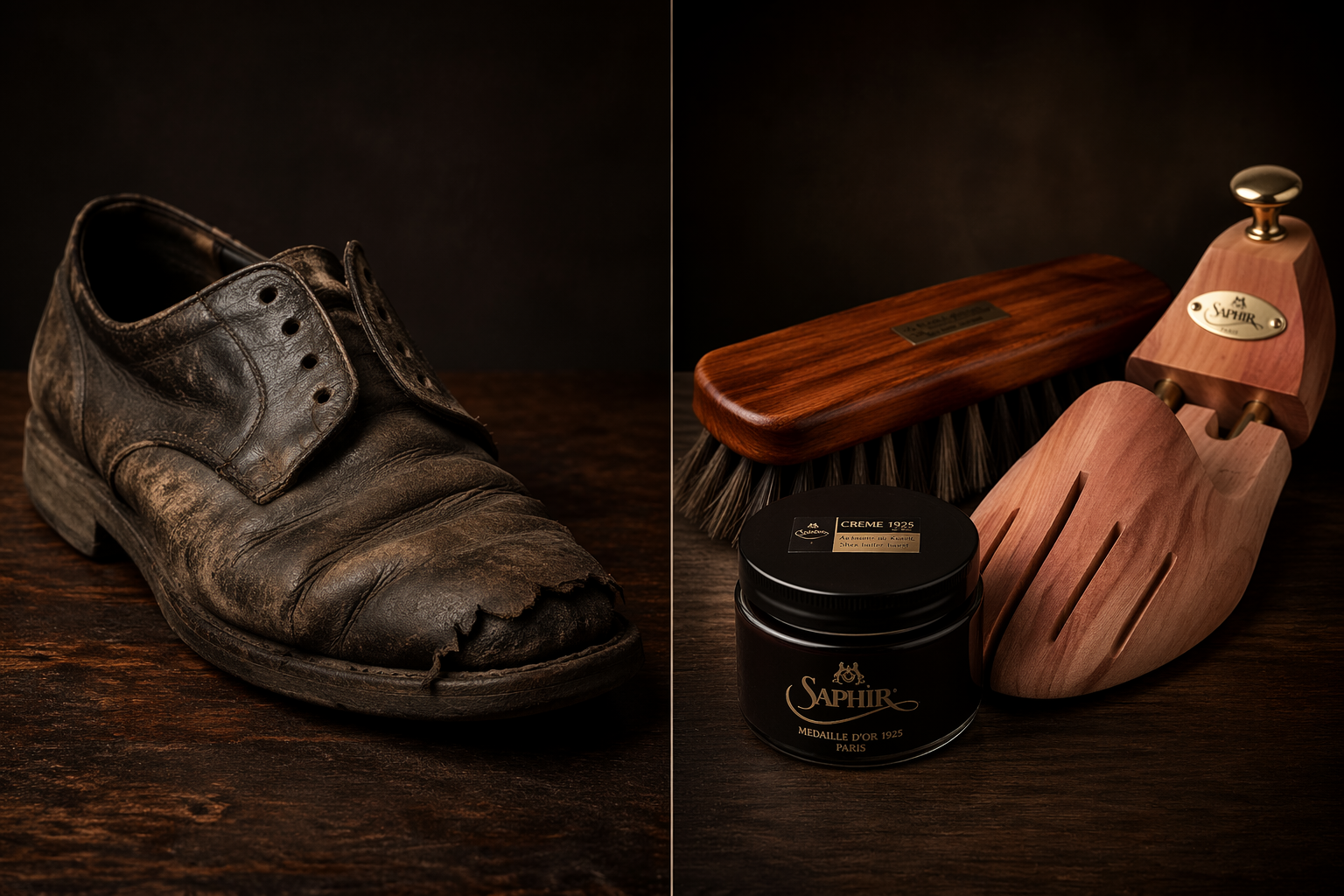
A senior shoe renovation expert with over 20 years of experience on Savile Row (who requested anonymity) remarked: “I see ‘shoe graveyards’ on my workbench every day. People spend a fortune on shoes, only to wash them with dish soap or place them on a radiator after a rain. Leather has a memory; it remembers every trauma and eventually gives back in the form of irreparable cracks.”
Mistake 1: Leaving Shoes in a “Hollow State” (Skipping Shoe Trees)
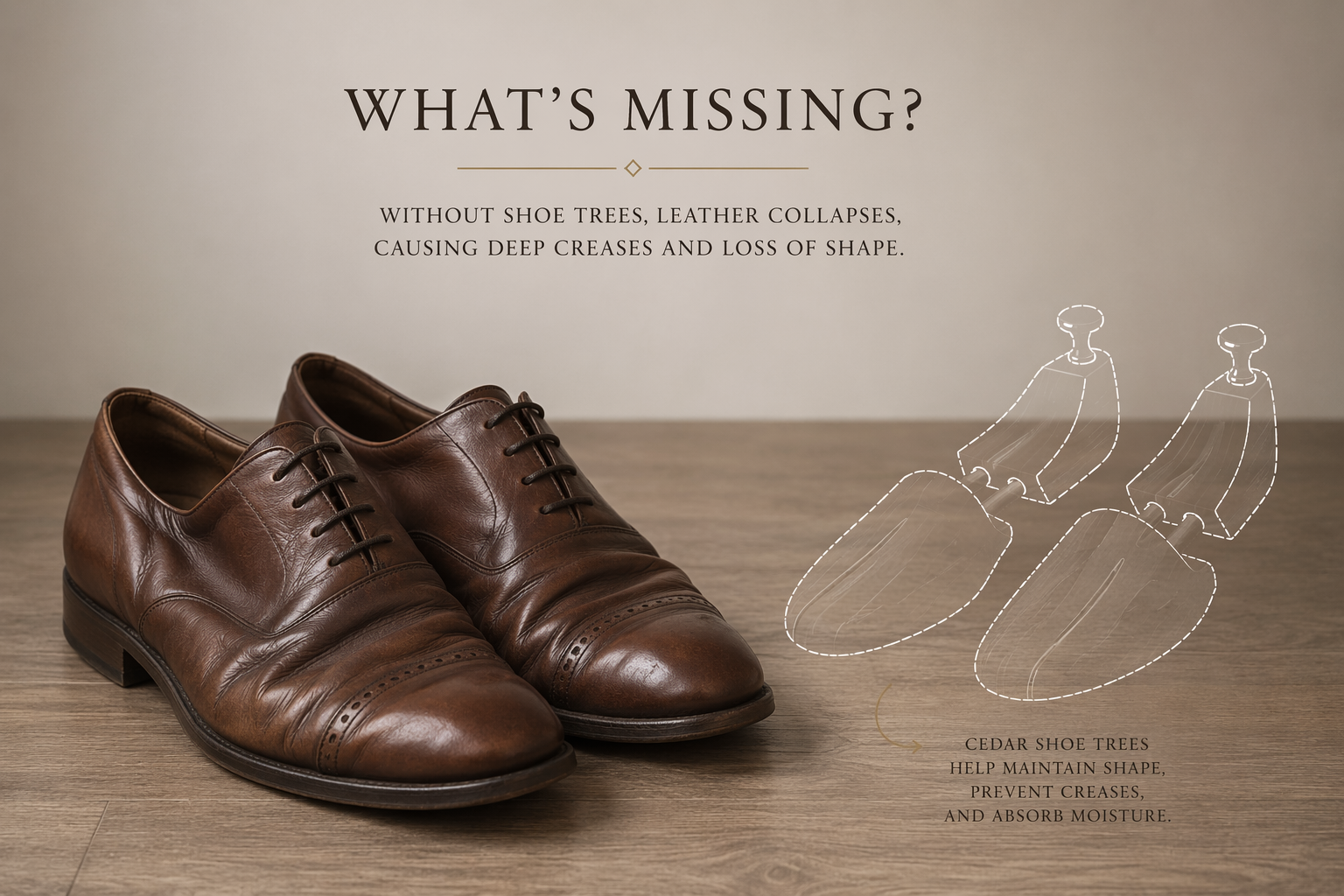
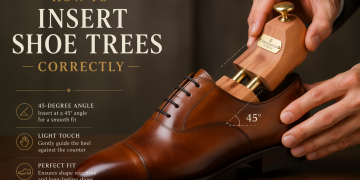
This is the most widespread and damaging error. Many believe shoe trees are merely storage accessories, but they are structural necessities.
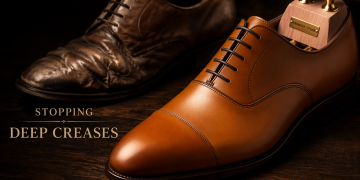
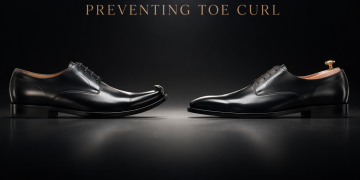
Leather is highly plastic, especially when damp from foot heat and perspiration. According to research on material fatigue in the International Journal of Fashion Design, Technology and Education, leather dried without support undergoes permanent fiber collapse and shrinkage. This leads to curling toes and deep, unsightly creases on the vamp that cannot be masked by polishing.
One anonymous user shared their painful experience: “I bought a pair of bespoke Oxfords and didn’t bring trees on a trip because of the weight. After one rainy walk and natural drying, the shoes became wrinkled like a dried leaf. No matter what professional shoe care products I used later, those deep creases never vanished.” Neglecting support is essentially accelerating mechanical fatigue.
Mistake 2: Over-Cleaning and Chemical Overload
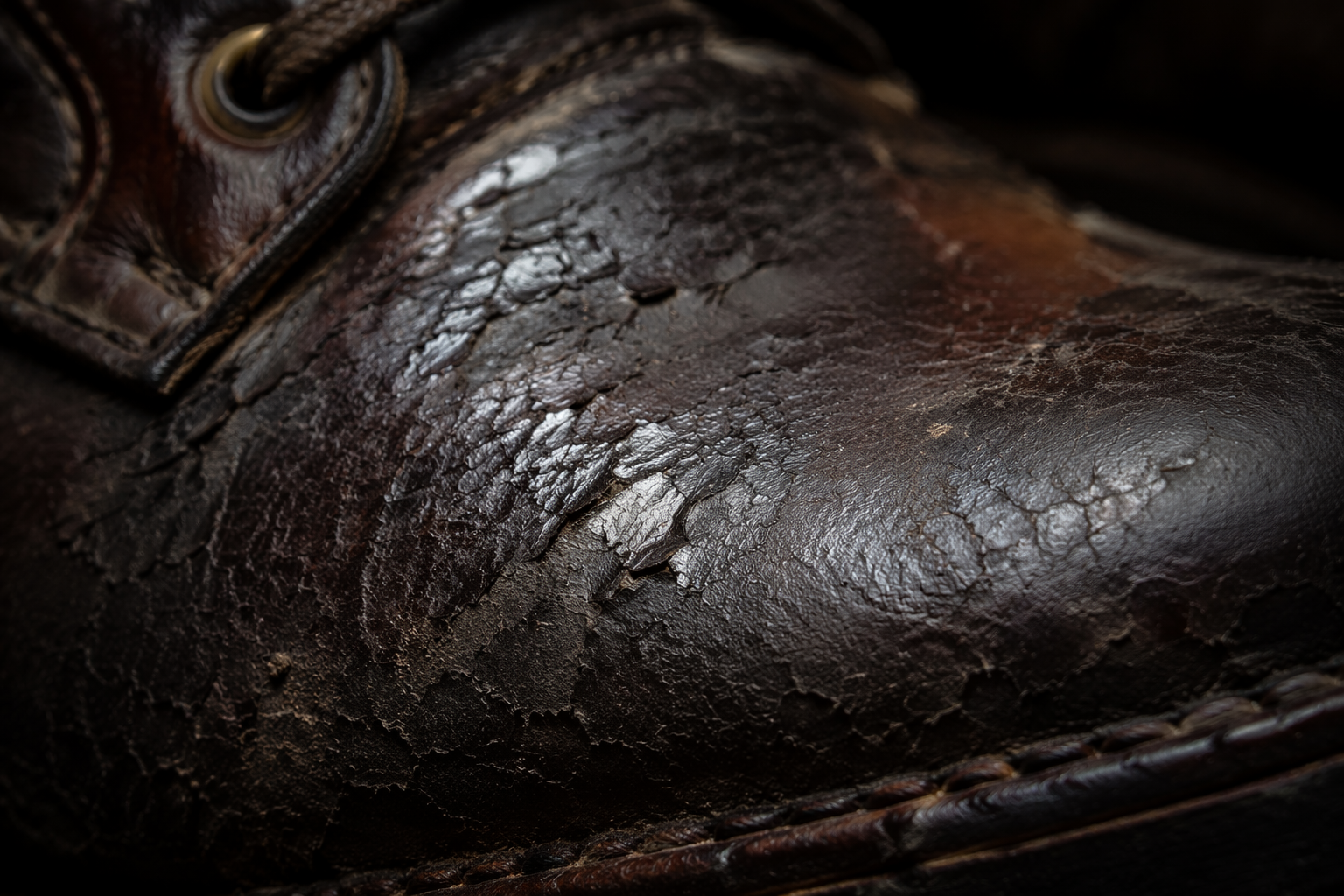
The “too much of a good thing” trap manifests as excessive polish application. Many hope a thick layer of wax will keep shoes shining, but this is the beginning of suffocating the leather.
Leather needs to breathe through microscopic pores. If you apply heavy silicone or synthetic wax products every few days, these substances accumulate in the pores. Over time, the old wax layers harden and crack, stripping away the leather’s internal moisture.
True professional care follows the “subtract before adding” principle. If you don’t remove old residue, new nutrients cannot penetrate the fibers. This is why a proper leather protection strategy is vital. Over-cleaning, especially with harsh solvents, strips the leather of its natural protective barrier.
Mistake 3: Forced Drying—The “Oven Test” for Leather
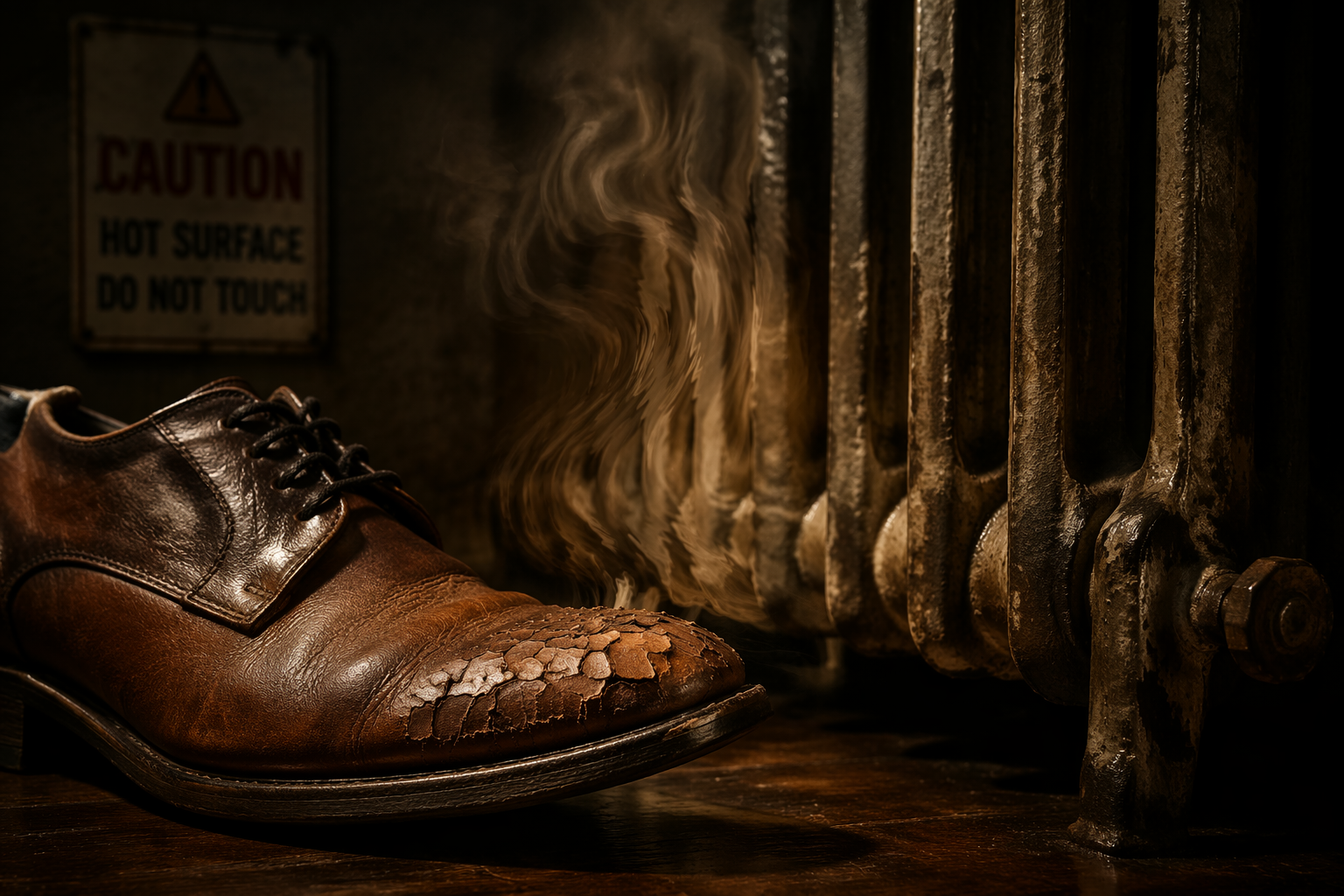
Getting shoes wet is inevitable, but the subsequent treatment determines their survival. Placing wet leather shoes near a radiator or using a hairdryer is the fastest way to kill leather.
Leather contains “bound water” in its molecular structure. When the temperature is too high, water evaporates rapidly, causing collagen fibers to shrink and embrittle. This damage is irreversible at the molecular level. Experimental data from footwear associations shows that heat exceeding 45°C (113°F) can lead to a 30% reduction in leather strength.
The correct method involves stuffing the shoes with absorbent paper and letting them balance slowly in a cool, ventilated area. This is a process where patience outweighs technique.
Mistake 4: Using Wrong Household Chemicals
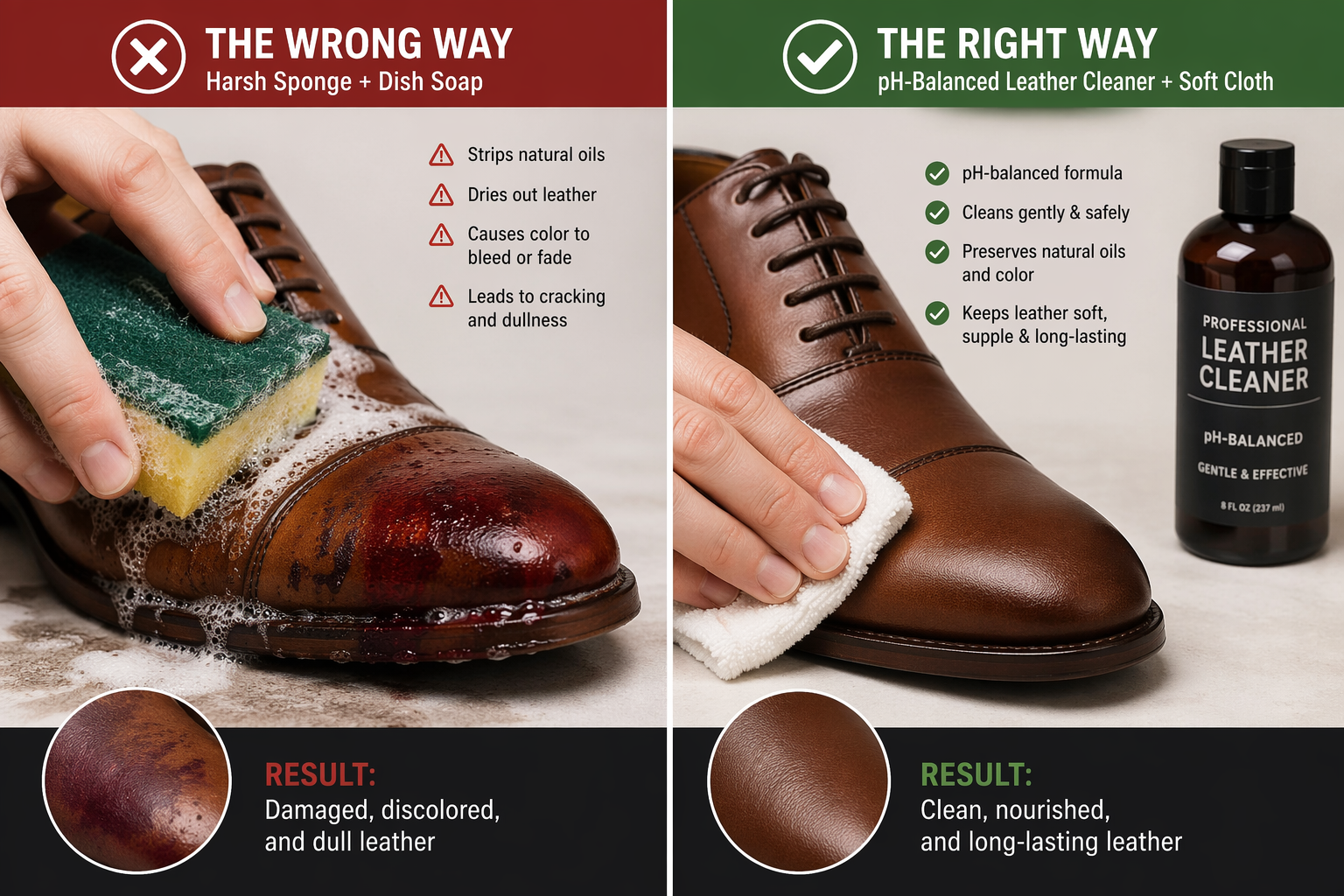
Beginners often use bar soap, dish detergent, or even baby wipes to clean their shoes for convenience. This is a massive cognitive blind spot.
Leather has a specific pH value (usually between 4.5 and 5.5, slightly acidic). Household cleaners are mostly alkaline, which disrupts the pH balance of the leather, leading to fiber denaturation. Alcohol in some wipes is a nemesis to leather dyes, causing localized fading and white spots.
Mistake 5: Neglecting the Sole and Edges
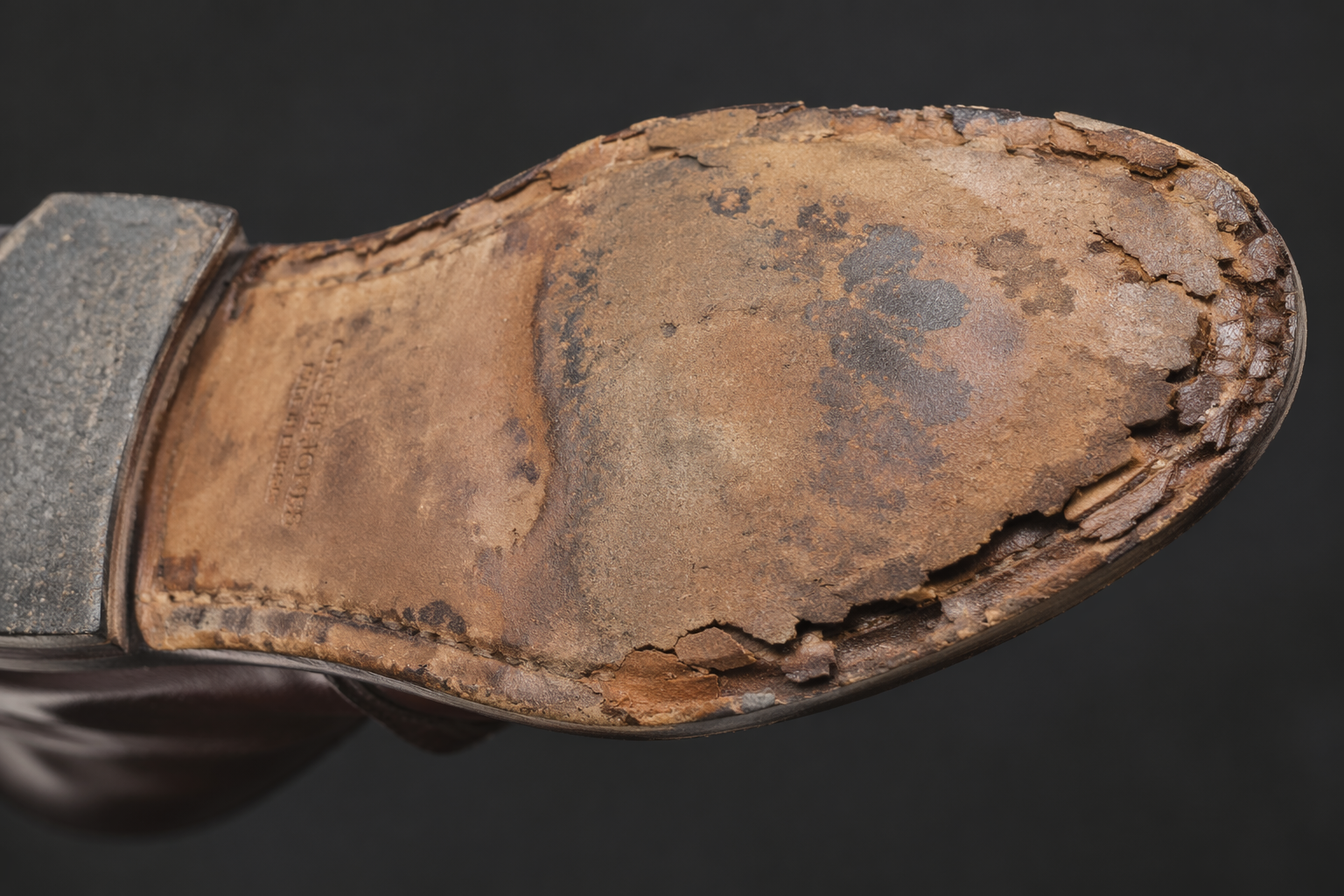
People tend to focus only on the upper and neglect the sole. Leather soles face harsher friction and moisture than the upper. Without regular application of sole oil, the leather bottom becomes dry, brittle, and may even delaminate.
Behavior Comparison: Ruinous Habits vs. Scientific Solutions
To help you identify your habits, we have organized the following table:
| Maintenance Stage | Ruinous Habit (Ruined) | Scientific Solution (Protected) |
|---|---|---|
| Moment After Removal | Throw in the hallway; let collapse | Insert Aromatic Cedar Shoe Trees immediately |
| After Getting Wet | Radiator drying or sun exposure | Stuff with paper; 24h air-dry in shade |
| Cleaning Logic | Apply new polish over old layers | Periodically remove old wax with cleaner |
| Chemical Choice | Dish soap, general wipes | pH-balanced leather wash |
| Wearing Pattern | Wear the same pair for days | Rotate shoes; give leather time to breathe |
Shopping Recommendations: Building a Professional System
To avoid the tragedy of ruined leather shoes, you need a truly professional kit:
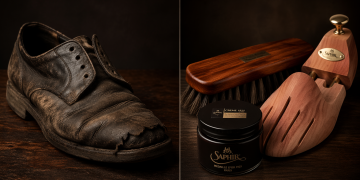
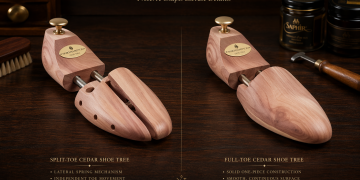
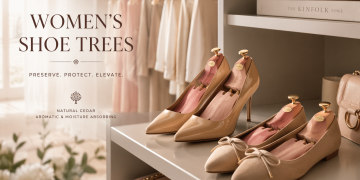
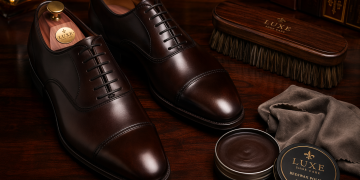
- Cedar Shoe Trees: Not an option, but a necessity. The foundation for solving creases and moisture.
- Horsehair Brush: For daily dusting; the heat from brushing helps leather absorb oils.
- Silicone-Free Conditioner: Products that penetrate deeply rather than staying on the surface.
- Nano-Waterproofer: Establish an invisible layer of leather protection before the rainy season.
Frequently Asked Questions (FAQ)
Q: My shoes are already cracked, can they be saved? A: Deep cracks are usually irreversible. Professional repair can fill color and stabilize structure, but cannot restore original tension. Prevention is far more important than a cure.
Q: Do all leather shoes need to be brushed every day? A: Not necessarily. Over-brushing can wear down the finish. Simply use a dry brush to remove dust daily.
Q: Is a cedar tree really that much better than plastic? A: Yes. Plastic cannot absorb moisture or neutralize odor. The natural acidity of cedar also inhibits bacterial growth.
Conclusion
Caring for shoes is a game of strategy against time. Every mistake avoided adds value to your investment. As our anonymous expert concluded: “Shoes are the only silent partners who walk thousands of miles with you. Treat them gently, and they will keep you dignified.” Avoid these five mistakes and start with a professional shoe care plan to ensure your footwear stands the test of time.