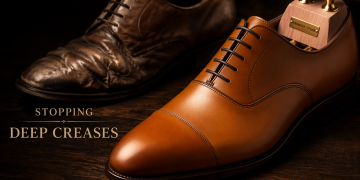
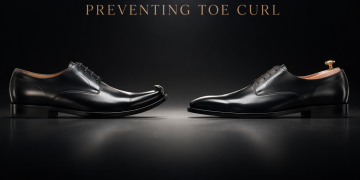
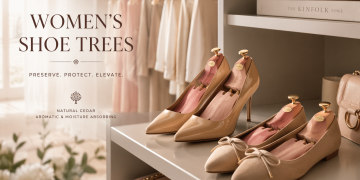
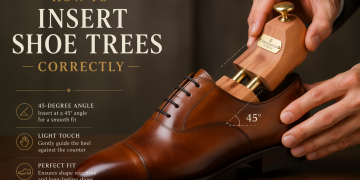


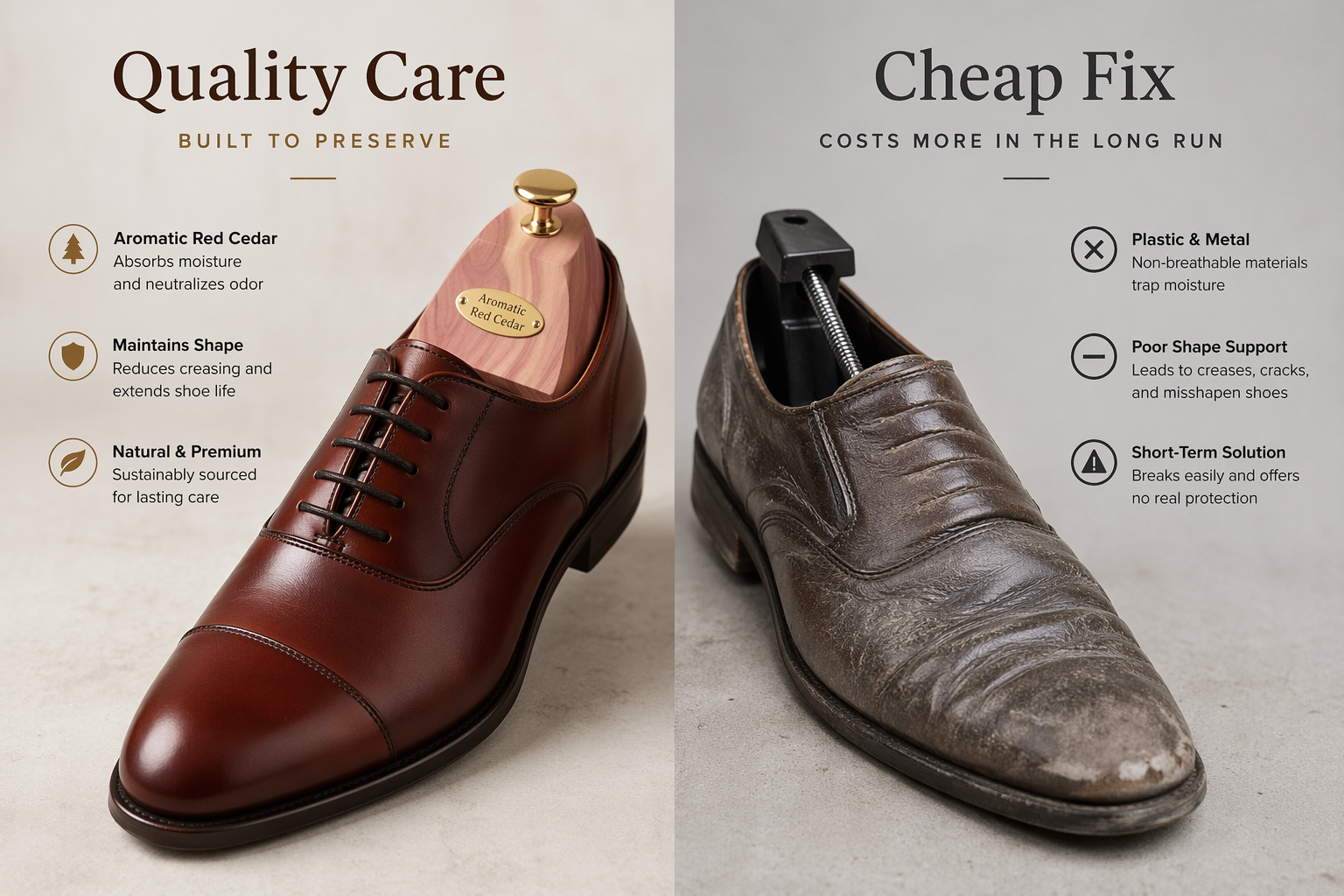
In the world of fine footwear, there is a recurring paradox that seasoned cobblers and leather enthusiasts often observe: a gentleman will spend $500 or more on a pair of handcrafted, Goodyear-welted leather oxfords, only to “save” $20 at the final stage by purchasing a pair of cheap plastic shoe trees. On the surface, it seems like a trivial accessory choice—a simple placeholder to keep the shoe’s shape. However, in the realm of material science and long-term preservation, this choice represents the difference between a shoe that lasts two decades and one that fails in two years.
“It is a classic case of being penny wise and pound foolish,” remarks a veteran technician from a renowned bespoke shoemaker on Savile Row, who requested anonymity due to the sensitivity of brand associations. “I see it every week. A client brings in a pair of shoes with severe ‘leather rot’ or collapsed linings, and nine times out of ten, the culprit is the plastic tree they’ve been using since day one. A plastic tree in a premium leather shoe is not a preservation tool; it is a slow-motion catastrophe.”
This article aims to strip away the marketing jargon and examine the hidden costs of cheap shoe trees. By analyzing the scientific interaction between leather and various materials, we will explore why wooden shoe trees are an essential investment for anyone serious about their footwear, and how the “greenhouse effect” of plastic can permanently ruin even the finest hides.
The Material Science of Leather and Sweat
To understand why the material of a shoe tree matters, we must first understand what happens inside a shoe during a typical day of wear. Human feet are equipped with approximately 250,000 sweat glands, and during an average day, they can produce between 150ml and 200ml of moisture. Leather, being a biological material composed of complex collagen fiber bundles, acts like a sponge. It doesn’t just hold moisture on the surface; it absorbs it deep into the fibers of the upper, the lining, and the thick vegetable-tanned leather insole.
The Greenhouse Effect of Plastic
Plastic is a non-porous, synthetic polymer. When a plastic shoe trees is inserted into a warm, damp shoe immediately after wear, it creates what experts call a “closed microclimate.” Because plastic cannot absorb moisture, the sweat trapped between the shoe tree and the leather lining has nowhere to go.
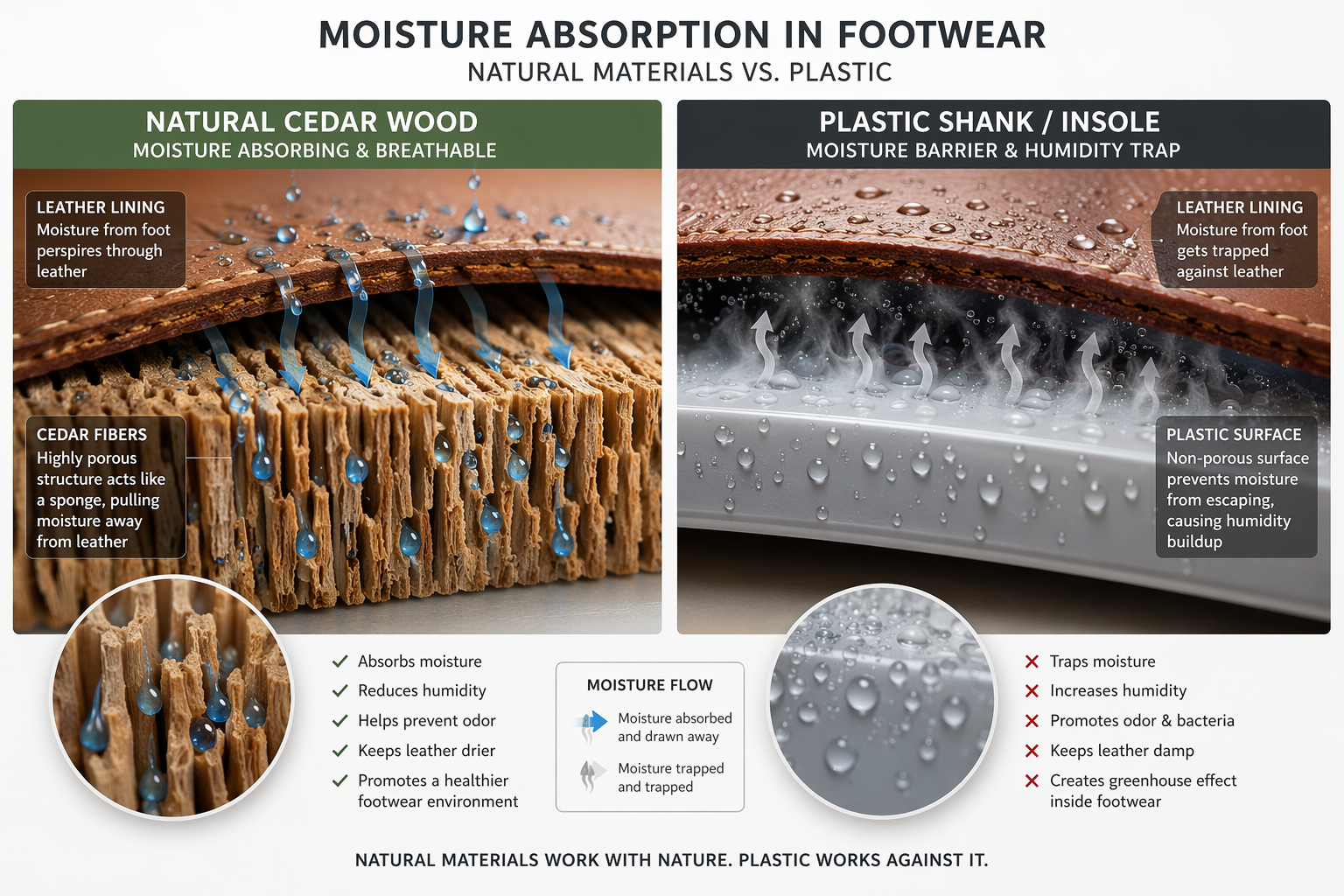
This creates a humid, stagnant environment inside the shoe. In the scientific community, this is akin to a greenhouse. The moisture sits against the leather fibers for hours, causing several structural issues:
- Fiber Swelling and Weakening: Excessive moisture causes the collagen fibers in the leather to swell. If they remain in this state too long, they lose their tensile strength. When the shoe eventually dries, these weakened fibers become brittle, leading to the premature cracking often seen at the flex points of the shoe (the vamp).
- Adhesive Breakdown: Many high-quality shoes use natural glues and cork fillers. Prolonged humidity can soften these components, leading to structural instability and the “squeaking” noise often associated with damaged footwear.
The Porous Advantage of Wood
In contrast, a high-quality wooden shoe trees functions as a natural desiccant. According to observations from SATRA (Shoe and Allied Trades Research Association), unfinished wood can absorb up to 30% of the ambient moisture within the first few hours of insertion. The wood fibers use capillary action to draw moisture out of the leather lining and into the core of the shoe tree, where it can then evaporate slowly and evenly. This process is critical for maintaining the best shoe trees performance—preserving the leather’s pH balance and preventing the fibers from becoming waterlogged.
The Silent Killer: Understanding “Leather Rot”
One of the most insidious problems caused by improper shoe storage is a phenomenon known in the trade as “leather rot” or internal degradation. This is rarely visible from the outside until it is too late.
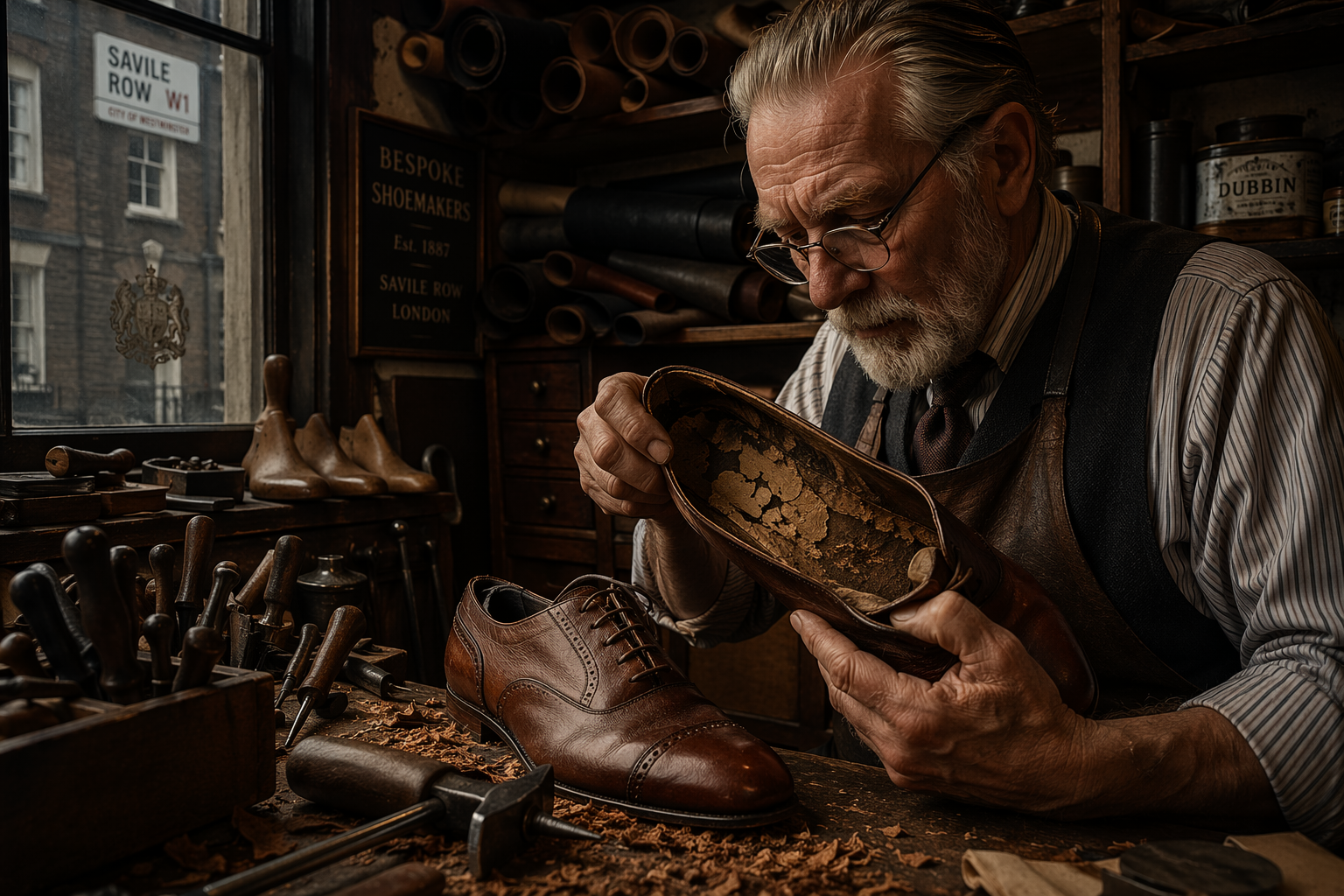
“When we peel back the lining of a shoe that has been stored with plastic trees for years, we often find a dark, crumbly mess,” the Savile Row technician explains. “The inner leather has essentially begun to decompose. The combination of heat, moisture, and the salts from human sweat creates a chemical reaction that eats away at the tanning agents in the leather. Once that internal structure is gone, the shoe loses its ‘soul.’ It will no longer hold its shape, no matter how many best shoe trees you put in it after the fact.”
This internal decay is often accompanied by a persistent, sour odor that no amount of spray can truly eliminate. Because plastic trees do nothing to combat bacteria, the shoes become a breeding ground for microorganisms that thrive in dark, damp spaces.
The Microbiological War in Your Shoes
Odor is not just a nuisance; it is a byproduct of biological activity. The primary culprit for “shoe smell” is Brevibacterium linens, which breaks down the proteins in sweat into stinky sulfur compounds.
Why Aromatic Cedar is the Ultimate Shield
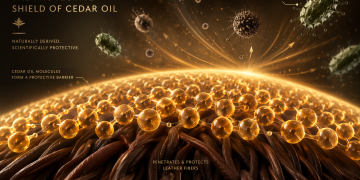
This is where aromatic cedar (Juniperus virginiana) proves its worth as the best shoe trees material. Beyond its pleasant scent, cedar contains natural volatile oils, specifically thujaplicin and cedrol, which possess powerful antifungal and antibacterial properties.
- Natural Disinfectant: Cedar oils actively inhibit the growth of the bacteria that cause foot odor and the fungi that cause athlete’s foot.
- Moisture Regulation: Unlike varnished wood, which is sealed and non-absorbent, raw cedar is highly porous. It regulates the drying process so the leather doesn’t dry too quickly (which causes cracking) or too slowly (which causes rot).
- Moth Repellent: For those with extensive wardrobes, cedar provides the added benefit of protecting natural linings (like wool or silk) from moth damage.
Real-World Feedback: The Cost of Experience
To gain a broader perspective, we spoke with long-term enthusiasts who have experimented with both materials over the decades.
Marc from Boston: A Lesson in Longevity
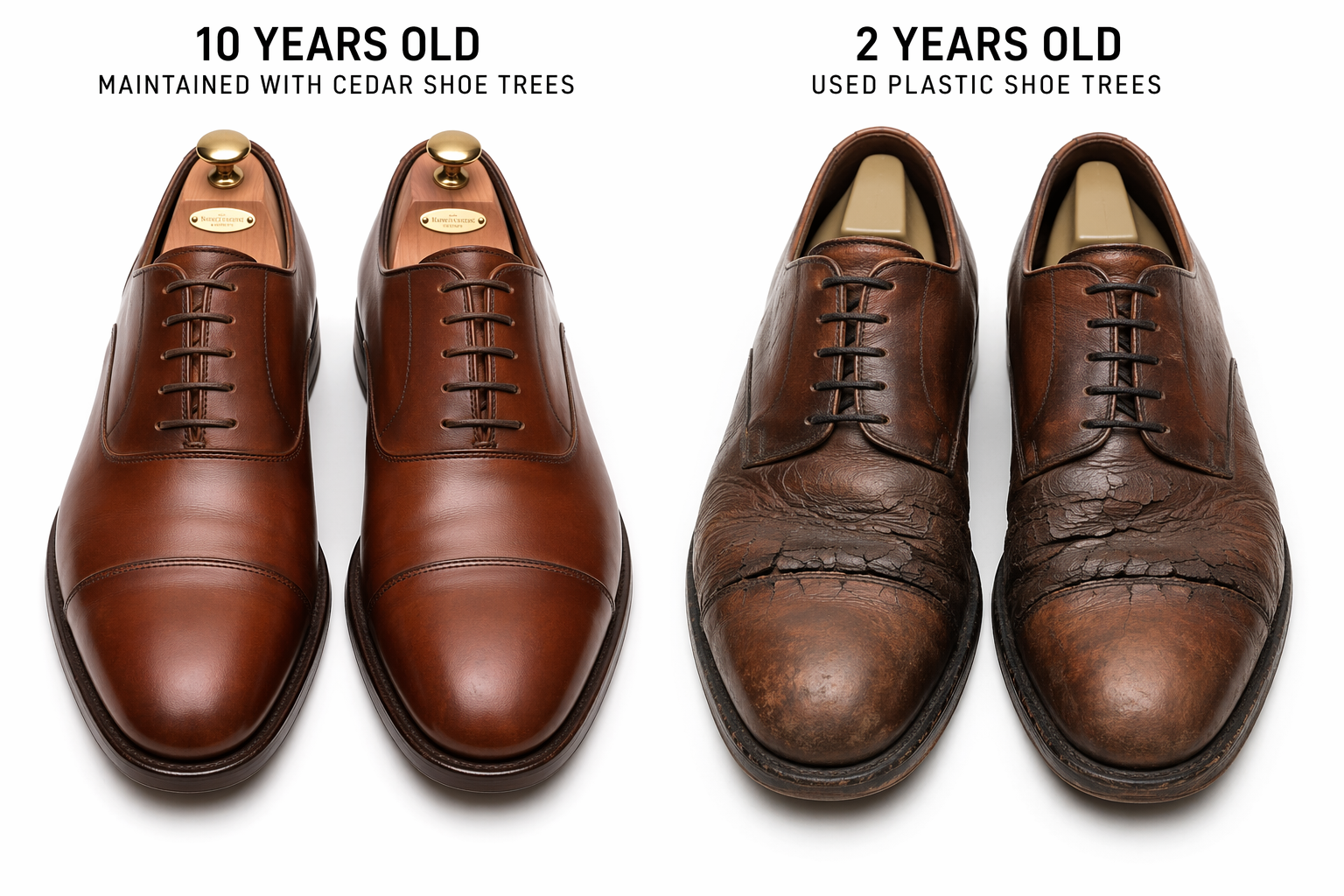
“I used to think people who spent $30 on a piece of wood were crazy,” says Marc, a financial consultant in Boston. “I had a dozen pairs of shoes and a dozen sets of $5 plastic trees from a big-box store. After three years, I noticed that my favorite loafers started smelling like a locker room, even though I polished them every week. When I finally took them to a cobbler, he showed me how the lining had turned black from mold. I had to throw away $2,000 worth of shoes because I wanted to save $200 on trees. Now, every new pair I buy gets a set of wooden shoe trees immediately. My current rotation is 10 years old and still smells like a cedar forest.”
The Anonymous Traveler’s Shift
“I travel 200 days a year, so weight is everything,” shares a frequent business traveler. “I used plastic trees to save weight in my suitcase. But in humid climates like Singapore, the shoes just wouldn’t dry. I’d put them on the next morning and they’d still feel damp and clammy. I switched to a lightweight, hollowed-out cedar tree. The difference in comfort is night and day. Putting on a dry, fresh-smelling shoe in the morning changes your whole mood for the day.”
The Financial ROI: A Comparative Analysis
When we look at the numbers, the case for best shoe trees becomes even more compelling.
| Factor | Plastic Shoe Trees | Wooden (Cedar) Shoe Trees |
|---|---|---|
| Initial Cost | $5 – $10 | $25 – $40 |
| Shoe Lifespan | 2 – 3 Years | 10 – 20+ Years |
| Maintenance | None | Light sanding every 2 years |
| Odor Control | Zero | Active Deodorizing |
| Moisture Absorption | Negative (traps moisture) | Excellent |
The ROI Calculation: If a $500 pair of shoes lasts 2 years with plastic trees, your cost is $250/year. If the same shoe lasts 15 years with cedar trees, your cost (including the tree) is roughly $35/year. The “cheap” option is actually seven times more expensive in the long run.
A Fact-Based Buying Guide for Best Shoe Trees
Not all wooden shoe trees are created equal. To ensure you are making a factual, high-quality purchase, follow this checklist:
- Look for “Aromatic Red Cedar”: Avoid white woods or pine, as they lack the antimicrobial oils of red cedar.
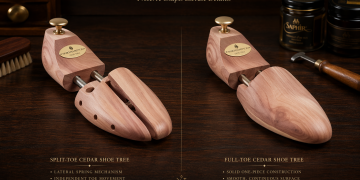
- Choose “Split-Toe” Designs: These have a spring-loaded side mechanism that maintains the width of the shoe, not just the length.
- Full Contoured Heel: Avoid “knob” or “ball” heels, which can put excessive point-pressure on the heel counter and distort the shoe’s shape over time.
- Unfinished Surfaces: Ensure the wood is raw. If it is varnished or shiny, it will not absorb moisture.
Key Q&A: Addressing Common Misconceptions
Q: Can I use plastic trees just for travel? A: While plastic is lighter, it should only be used for short periods (less than 24 hours) if weight is a critical constraint. For any storage longer than a day, wood is mandatory to prevent moisture damage.
Q: Do I need a different set of trees for every pair? A: Ideally, yes. The first 2-4 hours after wear are the most critical for moisture absorption. If you have a large collection, prioritize your most expensive or most frequently worn shoes first.
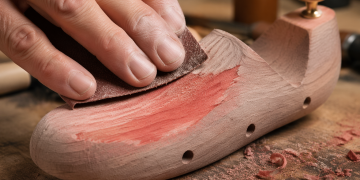
Q: My cedar trees lost their smell. Are they broken? A: No. Over time, the surface pores can become clogged with dust or oxidized oils. Simply use a fine-grit sandpaper (200 grit) to lightly sand the surface. The aroma and absorption properties will return immediately.
Conclusion: Respecting the Craft
At the end of the day, using wooden shoe trees is an act of respect—respect for the craftsmen who built your shoes, respect for the animals that provided the leather, and respect for your own hard-earned money. Plastic trees provide the illusion of care, but cedar trees provide the reality of preservation.
Your shoes are an investment in your personal image and comfort. Don’t let a $20 “savings” destroy a $500 masterpiece. Give your shoes a “heart of wood,” and they will carry you for a lifetime.